When I started the ‘My year with Agatha‘ series of articles in January 2026, I was hoping that by researching Agatha Christie’s life and works through the decades, I would develop a greater understanding of how she became the highest selling author of all time. As an aspiring writer, I also hoped to find some writing tips. What elements do you need for a great whodunit? What writing practices help turn an idea into a finished novel? After spending the last year studying Agatha, here’s ten writing tips I’ve learned from the Queen of Crime.
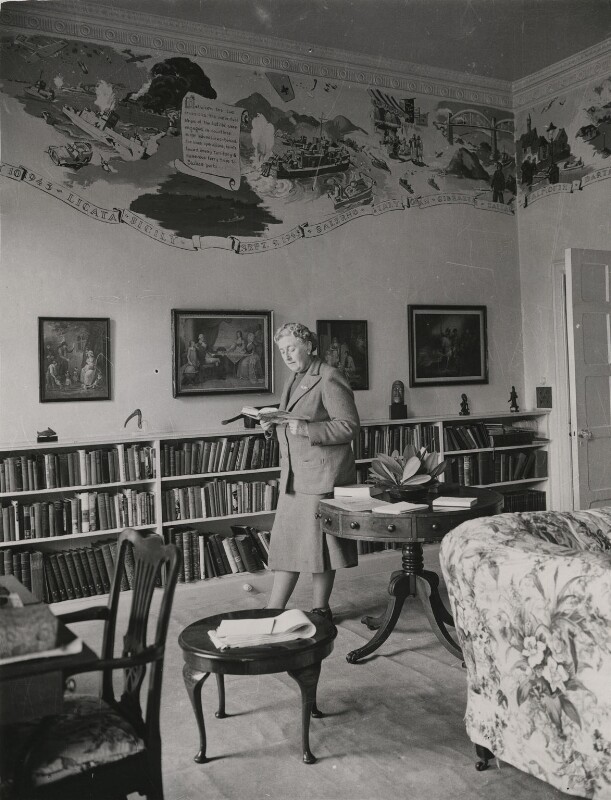
1. Keep a notebook (or several)
Agatha used notebooks to help plot her novels. Characters and their motives were jotted down, scribbled out and worked on within the pages of over 73 notebooks. These insights into the mind of the greatest writer of detective stories were discovered in 2004 at Greenway house in Devon after the death of Agatha’s daughter Rosalind. Researcher, archivist and Christie scholar, John Curran, was given the honour of deciphering these notebooks and subsequently published multiple books about them: Agatha Christie’s Secret Notebooks (2009), Agatha Christie’s Murder in the Making (2011), and in 2020 an updated and revised edition, Agatha Christie’s Complete Secret Notebooks.
The books are a fascinating insight into the effort that goes in to the planning of a detective novel. Most writers will tell you to keep a notebook, but what I like best about Agatha’s is that they are messy notebooks. They are not in order or neat, and are, at times, all over the place, but that is perfectly ok. So, if you want to be like Agatha, jot down a name, a question, a location, and hang the need for order (with apologies to Poirot who hates anything not ordered).
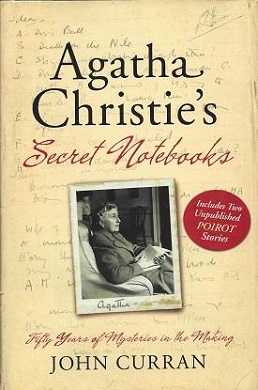
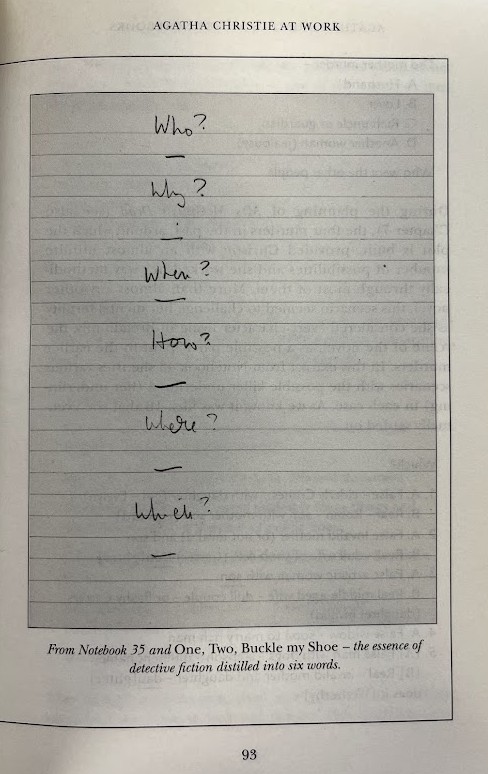
Left: Cover of Agatha Christie’s Secret Notebooks by John Curran; Right: A page from Agatha’s notebook which appeared in the same book by John Curran.
2. Answer the basic questions
Plotting an excellent whodunit is not just about creating a memorable detective or an intriguing setting, you have to get the basics right, and for Agatha that included answering the following prompts: Who? Why? When? How? Where? Which?
It was the ‘who’ that nearly always came first in the plotting. In a newspaper interview in 1970, Agatha described her writing process as a bit like auditioning actors. She would put characters in the story and see how they behaved, and if they were no good, she would take them out and start again: ‘it’s the characters themselves that consume my waking thoughts.’1 When pondering how a victim might be killed, Agatha preferred simplicity, ‘What’s difficult is having a very clear way of murdering people…but you can always rely on a blow to the head, no special knowledge needed for that’. She went on to say, ‘I must admit, I don’t like messy deaths. It’s much more interesting to have a person who dies easily in his bed and no one knows why.’2
3. Read widely
Agatha taught herself to read by the age of five, and was a lifelong lover of reading. She had a particular liking for Shakespeare, who is by far the most referenced writer across her works. She also enjoyed classic authors such as Charles Dickens, Sir Walter Scott and Jane Austen. As a member of the Detection Club, she would have read many crime novels from fellow club members such as Dorothy L Sayers and Anthony Berkeley, and her autobiography is littered with the names of contemporary writers that she admired and enjoyed, including Muriel Spark and Graham Greene.
Her greatest literary inspiration was Sherlock Holmes, the iconic sleuth created by Sir Arthur Conan Doyle. This Victorian detective had a huge influence on her writing, especially in the creation of Hercule Poirot. Holmes and Poirot both have idiosyncrasies that endear and annoy, and have somewhat dim-witted sidekicks in Doctor Watson and Captain Hastings. A sleuth with superior intellect, but with quirky mannerisms or odd personality traits is still hugely popular in crime fiction today.
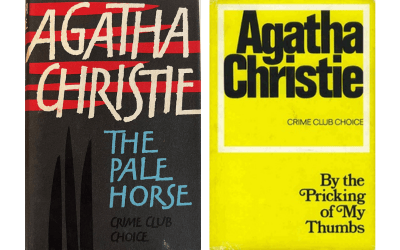
The Pale Horse (1961) and By the Pricking of My Thumbs (1968) are two Agatha titles inspired by the works of Shakespeare, most notably the play Macbeth.
4. Play by the rules (mostly)
As part of the Detection Club, Agatha would have sworn an oath on the skull of Eric (the group’s macabre mascot) to uphold the rules of detective fiction taken from the decalogue written by fellow member Ronald Knox. These rules were an important guide to crime writing in the interwar period, and while many took them seriously, they were actually tongue-in-cheek, and therefore open for writers of the genre to bend and sometimes break, which Agatha did. It’s difficult to go into detail about the times that Agatha broke the expected rules without spoiling the plot, so I will just say that The Murder of Roger Ackroyd, Murder on the Orient Express, several stories in the collection The Hound of Death, as well as the short story The Unbreakable Alibi, are all great examples to read if you want to see how a master of storytelling breaks the rules with genius results.
5. Do the dishes or take a bath
If you have ever been staring at a blank page waiting for inspiration to strike and then started doing domestic chores as a form of procrastination, then you’re in luck, because Agatha actually recommended doing the dishes as conducive to plotting. In the Forward for the 1953 Penguin edition of The Labours of Hercules, Agatha wrote, ‘the really safe and satisfactory place to work out a story in your mind is when you are washing up.‘3
If chores don’t really sound like your kind of thing, then another option is to take a bath. When Agatha bought Greenway house in 1938, she tasked her friend Guilford Bell with the renovations. Bell was a young Australian architect, living in England after finishing his studies (he was also a member of the Bell family that Agatha stayed with on her round-the-world voyage in 1922). Agatha insisted that the renovations of Greenway included the installation of a large bathtub with a shelf so that she could sit back and eat apples while plotting her murders. Agatha reportedly took Guilford shopping for a bathtub in central London to find the perfect one, and even got up into a window display to try a few out.4
6. Eavesdrop and talk to strangers
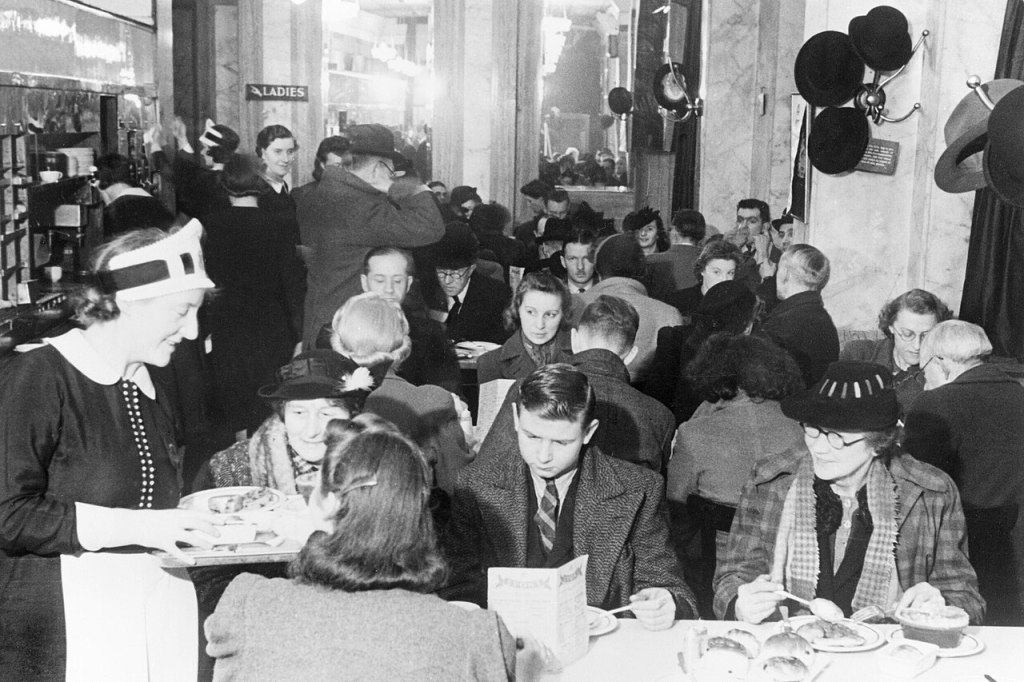
In the article I wrote about Agatha’s booming career in the 1930s, I mentioned that Agatha often found inspiration from people watching, eavesdropping and sometimes even talking to strangers. The character Parker Pyne was developed after Agatha spotted a man with a bald head having lunch at Corner House in London. He was enthusiastically discussing statistics with his lunch companion, which intrigued Agatha: ‘I had never thought about statistics before (and indeed seldom think of them now!) but the enthusiasm with which they were being discussed awakened my interest.‘5
One of the short stories in the collection Parker Pyne Investigates (1934) was inspired by an odd encounter that Agatha had with a woman as she stopped to admire a display in a shop window. This woman couldn’t decide what to do with all the money that she had, was bored of buying useless objects, and was vehemently against giving her fortune away to hospitals or charities.6 This woman became the inspiration for The Case of the Rich Woman.
7. Retreat into your imagination
Agatha’s second husband Max Mallowan wrote in his memoir that the secret to Agatha’s extensive publishing history was that she lived in a ‘permanent condition of fantasy’7 and could quite easily retreat into her imagination and ignore distractions from the outside world. This worked well during WWII, when Agatha wrote her murder mystery set in Ancient Egypt, Death Comes as the End (1944). Agatha engrossed herself in her research and writing and became completely ‘oblivious’8 to her surroundings as London experienced the Blitz. She never went down to bomb shelters for fear of being buried alive, so endured the bombings by escaping into the world of her novels. Therefore, if Agatha can sit down and right while bombs dropped from the skies, aspiring writers have no excuse for being constantly distracted.
8. Travel
It is no secret that one of Agatha’s most popular mysteries, Death on the Nile (1937), was inspired by her love of Egypt, a country which she first visited as a teenager. She later revisited the country with her second husband Max Mallowan, sometimes spending the winter there mulling over her next mystery. Of the book, she wrote, ‘When I read it now, I feel myself back again on the steamer from Aswan to Wadi Halfa.’9
It wasn’t just travel to Egypt that inspired Agatha. A delayed journey on the Orient Express was the foundation for Murder on the Orient Express (1934), and several novels were inspired by her time on archaeological digs in Syria and Iraq, including Murder in Mesopotamia (1936), They Came to Baghdad (1951), and Absent in the Spring (1944), the novel written under her pseudonym Mary Westmacott.
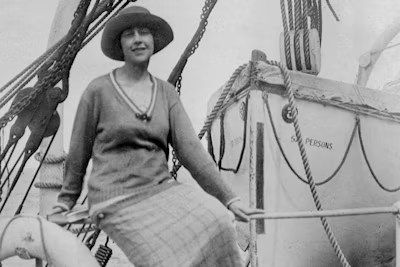
Aside from an exotic setting, travel enables you to try new experiences and meet new people. In 1922 Agatha went on a round-the-world voyage, which took her to South Africa, Australia, New Zealand, Hawaii and Canada. In South Africa, she tried surfing for the first time, and wrote about this experience in The Man in the Brown Suit (1924). In Australia, she met the Bell family and became lifelong friends. Guilford Bell visited Agatha in 1938 and helped her renovate Greenway house, and there is a suggestion that Una Bell may have been the inspiration for the character Una Drake in the short story The Unbreakable Alibi.
9. Create a room of your own
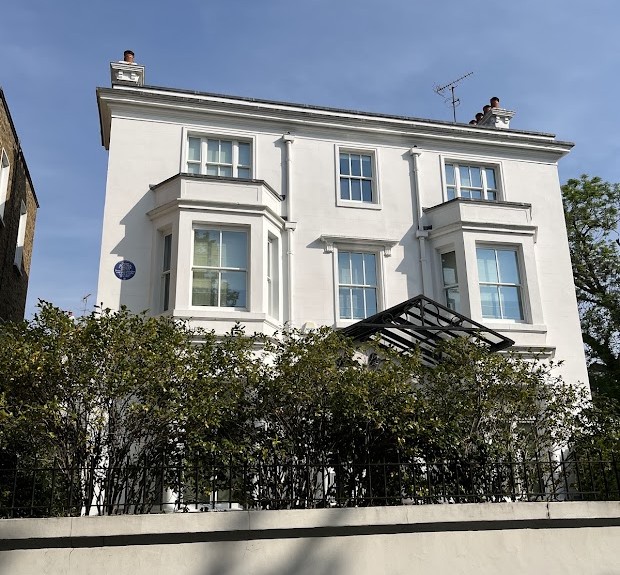
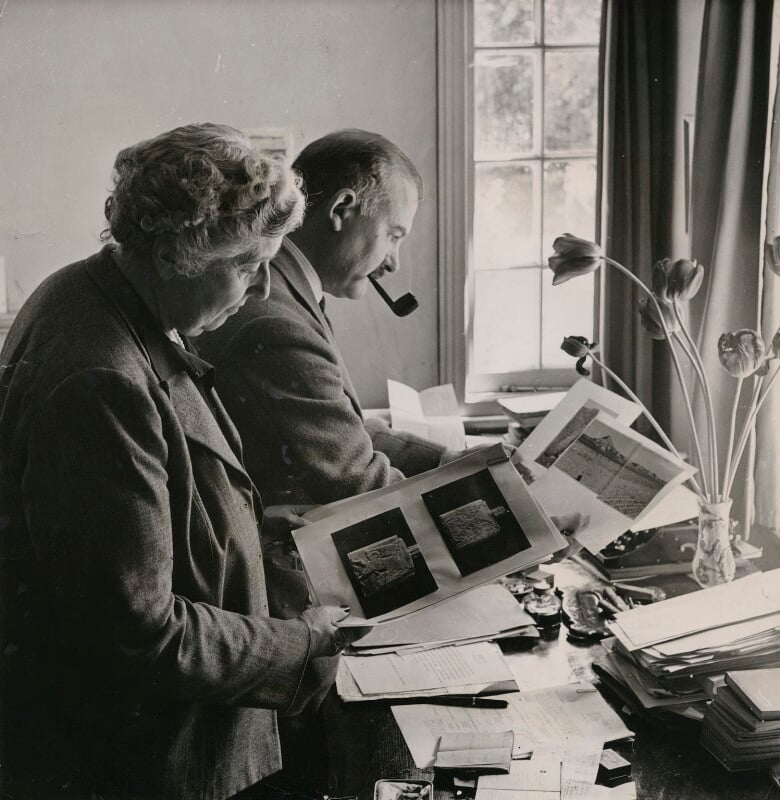
The writer Virginia Woolf once famously wrote that ‘a woman must have money and a room of her own if she is to write fiction.’ So where did Agatha write her novels? The answer might surprise you. You might think that the magnificent Greenway would be the ideal writer’s retreat with its sprawling gardens and sublime views, but Agatha reportedly never wrote at Greenway. Instead, the bulk of her writing was done on archaeological digs in Syria and Iraq. While on these expeditions with her archaeologist husband, Max Mallowan, Agatha would spend her mornings writing, sometimes in a tent, and then help out on the dig in the afternoon. It wasn’t until the early 1950s on a dig at Nimrud in Iraq that Agatha paid £50 of her own money for a room to be built onto the side of the expedition house, which she used as a writing room.10 Back home in England, Agatha once claimed that the only house she ever owned where she had a dedicated writing room was 58 Sheffield Terrace in London.11
10. Join a writer’s group
Agatha was one of the founding members of the Detection Club, the exclusive group of writers of detective fiction that started as an informal supper club in the 1920s, before it was formalised in 1930. She served as the club President from 1957 until her death in 1976, and contributed to The Floating Admiral (1931), the crime novel written in ’round-robin’ style by club members. Membership of this club allowed Agatha to discuss crimes (both historic and current), innovations in criminology (such as forensics), as well as the art of crime writing, which was beginning to boom as a popular genre in this period. The club gave members the opportunity to help each other in puzzling out the technical elements required for a detective story. Perhaps over dinner they teased out the Who? Why? When? How? Where? and Which?
So there you have it, ten lessons learned from the Queen of Crime about the art of crafting the perfect whodunit. You can read more articles about Agatha Christie, her life and her works, by reading the My Year with Agatha series.
References
- The Canberra Times, 12 November 1970 ↩︎
- The Canberra Times, 12 November 1970 ↩︎
- Christie, A (1953) The Labours of Hercules, Penguin, London, [Forward] ↩︎
- Morgan, J (1984) Agatha Christie: a biography, Collins, London, p 220 ↩︎
- Christie, A (1953) Parker Pyne Investigates, Penguin, London, [Forward] ↩︎
- as above ↩︎
- Mallowan, M.E.L. (1977) Mallowan’s Memoirs, Collins, London, p 204 ↩︎
- Christie, A (1953), Death Comes as the End, Penguin, London, [Forward]. ↩︎
- Christie, A (1953) Death on the Nile, Penguin, London, p 6) ↩︎
- Christie, A (2010) An Autobiography, Harper Collins, London, p. 524-525 ↩︎
- Christie, A (2010) An Autobiography, Harper Collins, London, p. 467 ↩︎






Leave a Reply