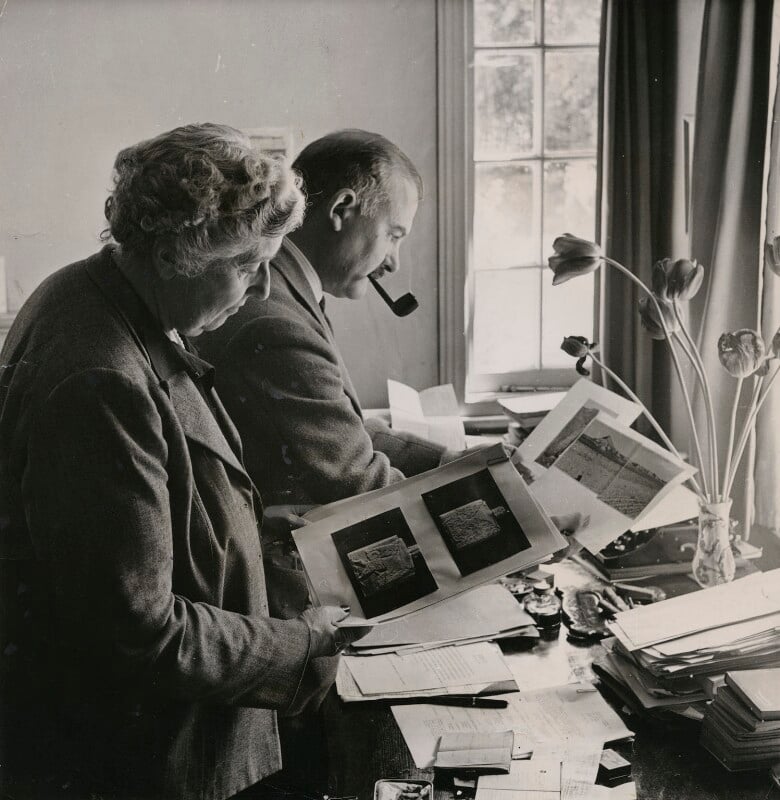
When we think about Agatha Christie, images of quaint English villages and country houses probably spring most often to mind. Perhaps we conflate images of Agatha with her elderly sleuth Miss Marple, whose character and style of detection is firmly rooted in English country villages. It is perhaps more difficult to imagine Agatha as an adventuress, someone who sets off into wild and unpredictable landscapes, sleeps in tents, and forgoes some of the luxuries of home. This version of Agatha spent nearly two decades travelling with her husband Max Mallowan to archaeological digs in Syria and Iraq, and this is the Agatha we’ll be exploring today.
Agatha’s ‘meet cute’
Agatha first travelled to the Middle East in 1928. After finalising her divorce from Archie, Agatha needed an escape and had planned to journey to the West Indies. A chance encounter at a dinner party inspired her to change her travel plans. The thing that clinched the deal was the promise that the journey would require her to take the Orient Express. For Agatha, that luxurious train was the stuff of her dreams, and well, if a woman couldn’t treat herself to a little luxury after a heartbreaking divorce, then when could she?
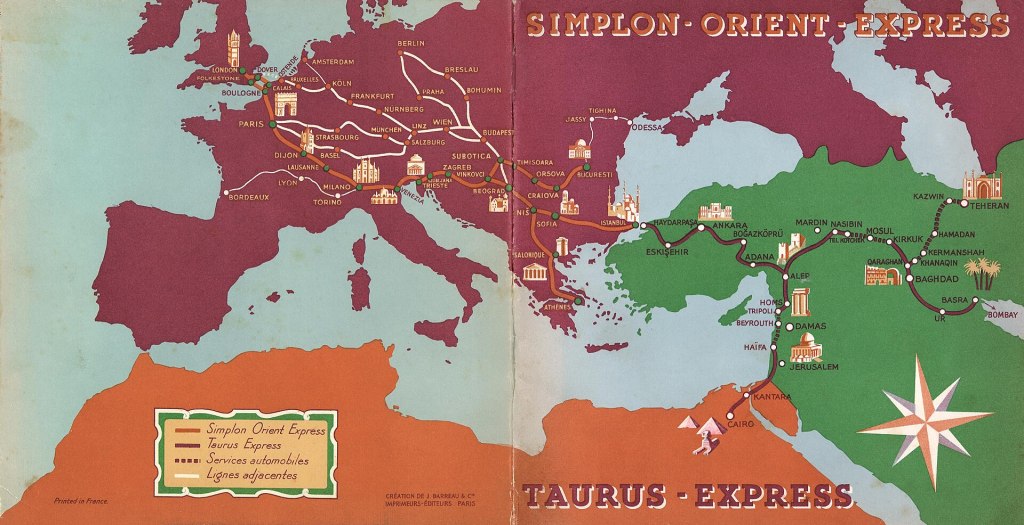
That journey would prove inspirational for her writing, but it was her destination that would be life-changing. After leaving the train at Damascus, Agatha ventured across the desert by bus (an enterprise run by Australian brothers Gerry and Norman Nairn) to Baghdad. After a short stay there, Agatha decided to see Ur, where she became a guest of Leonard and Katharine Woolley. The couple were well-known archaeologists who were usually adverse to visitors, but they allowed Agatha onto their dig site as Katharine had recently finished reading The Murder of Roger Ackroyd, and was a fan. Of her time there, Agatha wrote, ‘I fell in love with Ur.’1
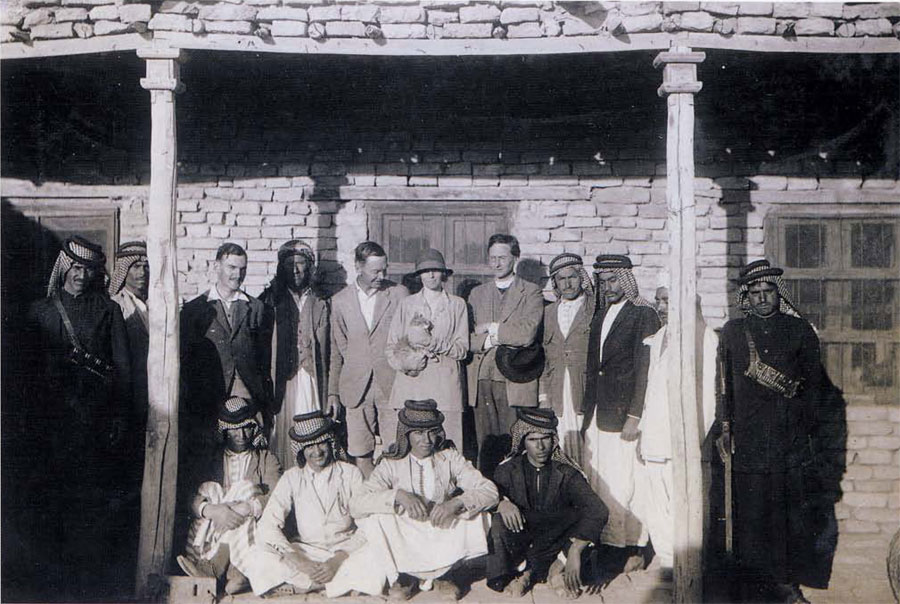
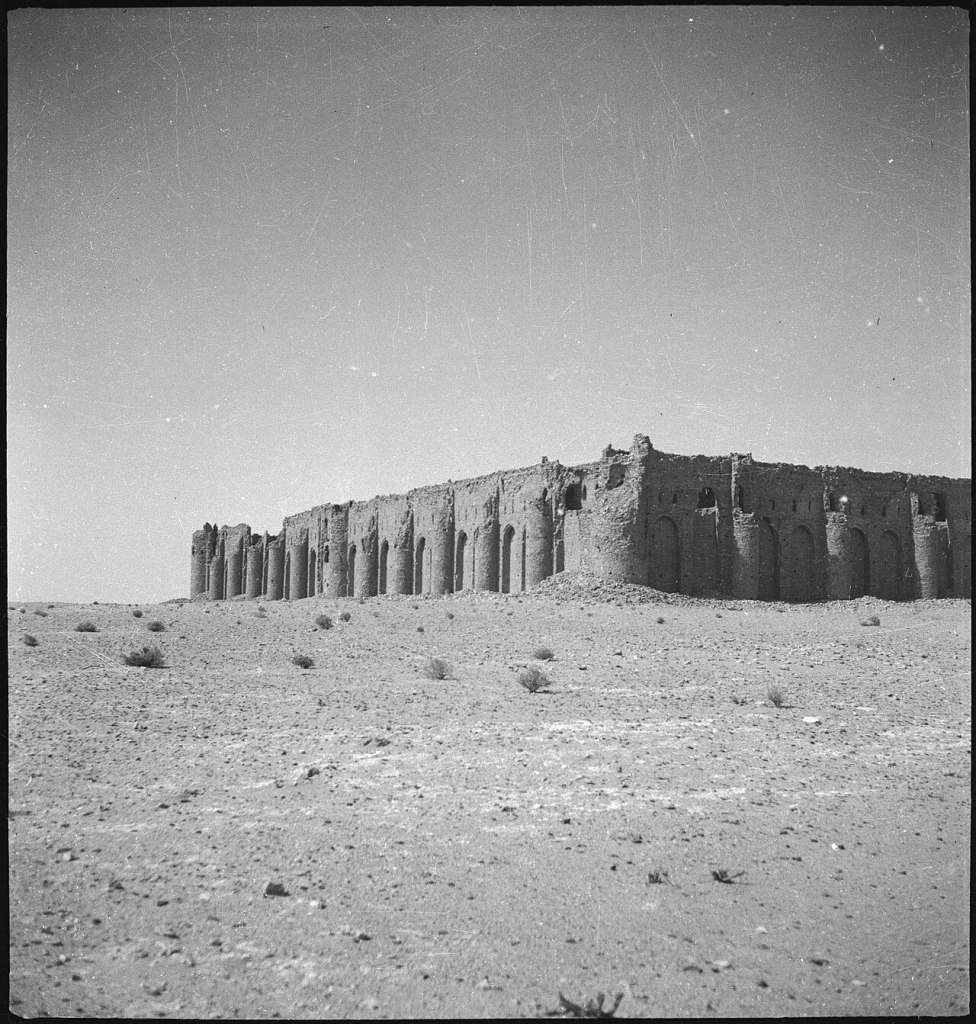
Agatha returned to visit the Woolley’s at Ur in February 1930, and while there met a young man named Max Mallowan, who was working as an assistant archaeologist on the site. It was Agatha the adventuress that Max quickly fell in love with. Tasked with taking Agatha sightseeing in the desert enroute to Baghdad, Max planned an itinerary that saw them navigating the parapets of the Ummayad castle of Ukhaidir, a site made famous by excavations previously made by the pioneering female explorer Gertrude Bell2. To escape the heat, Agatha and Max then took a dip in a salt lake, stripping down to their underwear (what would Agatha’s Victorian mother have thought?!).
The story continues that as dusk fell on the desert, their car became bogged in sand and efforts by their driver to budge it proved futile. He soon set off in search of assistance, leaving Max and Agatha alone as night descended. With some effort, they were eventually able to get the car moving, and headed to the nearest town where they hoped to find accommodation for the night. As they arrived in Kerbala, it turned out that the only accommodation available was a prison cell in a police station3.
In her autobiography, Agatha makes the setting sound almost romantic, despite its oddness. She wrote:
Dinner was served at the police post on a table outside, with a large moon above us, and the constant monotonous yet musical croaking of frogs. Whenever I hear frogs I think of Kerbala and that evening.4
In his memoir, Max remembered that in the morning, they had breakfast together in the prison, where a policeman recited ‘twinkle twinkle little star’ to them in Arabic. What seemed to impress Max most about his travel companion was that at no point throughout their odd adventure did Agatha seem to mind when things went awry, instead, she enjoyed the moment, in true adventuress style. Max wrote in his memoir:
After being stuck in the sand on the way to Kerbala, we never looked back and I don’t think I guessed that the short journey to Baghdad would lead to a longer union which was destined to last for the best part of fifty years.5
Iraq would always hold a special place in the hearts of Agatha and Max.
The life of an archaeologist’s wife
After marrying Max in Edinburgh in 1930, Agatha would go on to accompany him on nearly all of his future digs until his retirement from field work in 1958. Time on the digs provided Agatha with many benefits- time away from England and the press (who had taken a keen interest in her personal life since her disappearance in 1926), the space and quiet to write, endless inspiration, and the opportunity to develop new skills.
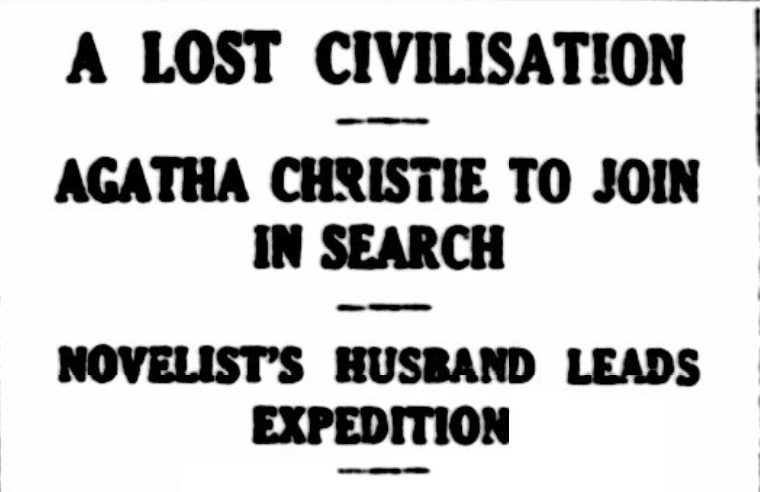
In the early 1930s, in an effort to make herself useful on digs, Agatha took lessons in sketching and photography in London. Sketching proved not to be on Agatha’s list of talents, at least not for the standard required for accurate to-scale drawings of intricate objects. Photography was more suited to Agatha, perhaps because of the chemical knowledge required to process the prints. In 1936, in a report written about the excavations at Chagar Bazar in Syria, Max credits his wife as having taken all of the photographs of the site6. It was a task that she would continue at multiple other dig sites for the next twenty years.
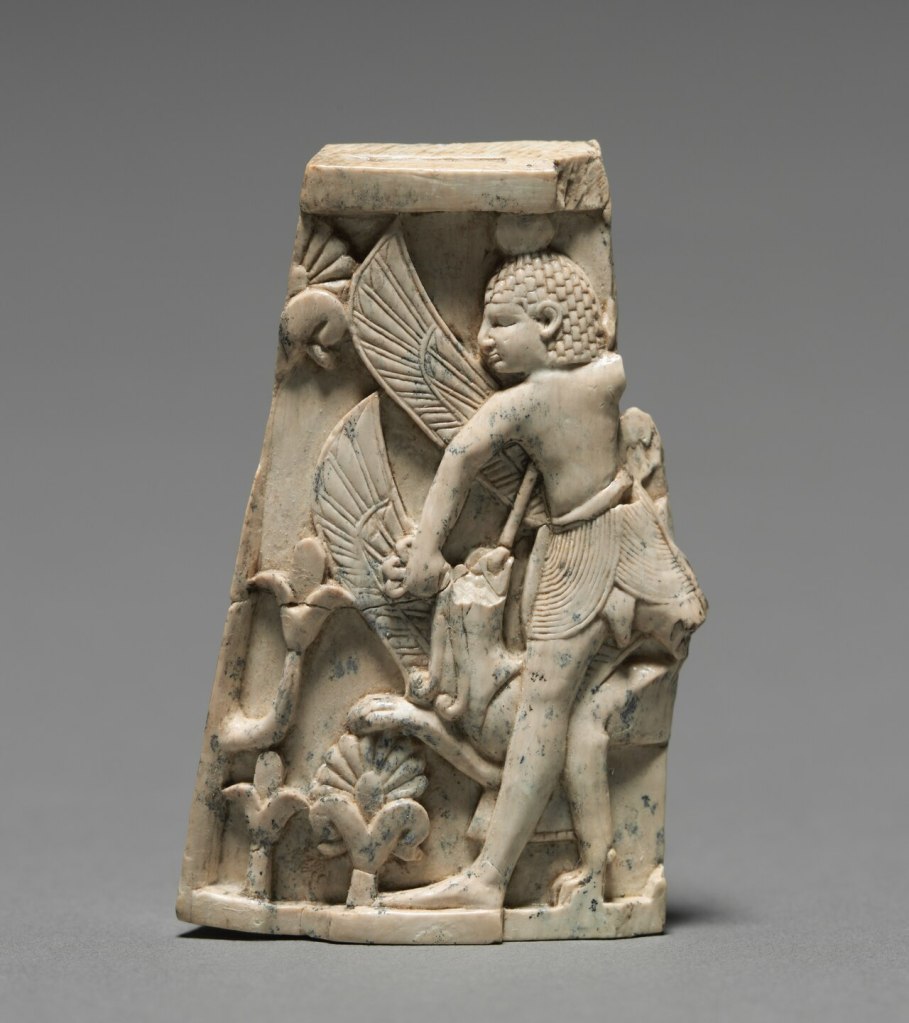
One of the most entertaining stories of Agatha’s involvement in digs is that she once used her face cream (reportedly Pond’s Cold Cream) as a cleaning solution for some ivory figures unearthed on a dig at Nimrud. Excavations at Nimrud began in 1949 and continued for the next decade, with over a thousand ivory pieces found. Some of these statues are now in the British Museum in London and the Ashmolean Museum in Oxford. Max would later write a book, Nimrud and its Remains (1966), and dedicate it to his wife:
I dedicate this book to my wife Agatha Christie Mallowan, who shared with me in the joys and trials of excavating Nimrud and lightening our labours through her imagination, her skill, and her kindness7.
A room of her own
Accommodation on the digs throughout the decades varied greatly. Sometimes Agatha was sleeping on camp beds in tents, while other times an expedition house was built. At Nimrud, a four-room house was built next to the excavation site, including a kitchen, living room, antiquities room with an attached indoor photographic studio, and a small office for Max. Staff would sleep in tents, but would have this central building to congregate in. The original plan for the mud-brick building then grew to include a hall and extra common room8.
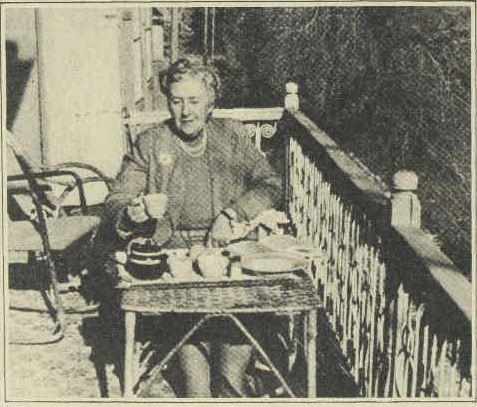
At some point, Agatha also petitioned to have a room added for her own use. Here, she would spend the morning tapping away on her typewriter, writing many of the books that came to be published in the 1950s. Agatha paid £50 of her own money for the 3 metre square mud-brick room to be built. It was simply furnished, with rugs bought from a bazaar in Baghdad, a table and a chair. On the wall hung two paintings by an Iraqi artist, and the one window had views of the Kurdistan mountains in the distance. On the door was a cuneiform tablet made by one of the excavation staff which declared the room to be ‘Beit Agatha’, or ‘Agatha’s House’.9
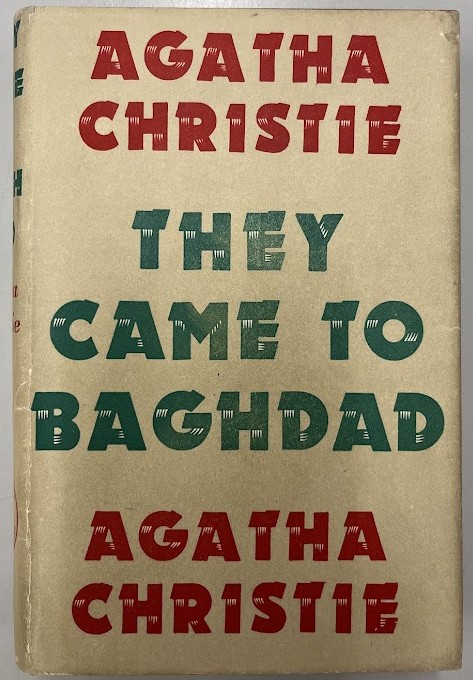
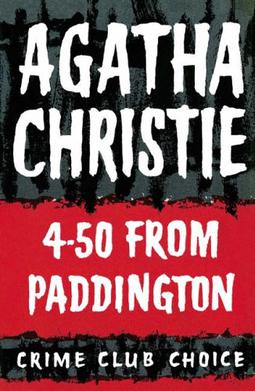
It is possible that in that small room in Iraq, Agatha Christie wrote some of my favourite titles, including, They Came to Baghdad (1951), a thriller with one of my favourite Christie protagonists, the plucky adventuress Victoria Jones; as well as my all time favourite Agatha whodunnit, 4.50 from Paddington (1957), which features the sophisticated woman-of-the-world, Lucy Eyelesbarrow.
It was also in that room of her own at Nimrud that Agatha began to reflect on her life and its extraordinary adventures. Here, she typed the first words of what would become her autobiography, which just goes to show what a woman can achieve when given a room of her own to write in.
References
- Christie, A (2010) An Autobiography, Harper Collins, London, p. 377 ↩︎
- Mallowan, M.E.L. (1977) Mallowan’s memoirs, Collins, London, p. 44 ↩︎
- as above ↩︎
- Christie, A (2010) An Autobiography, Harper Collins, London, p. 396 ↩︎
- Mallowan, M.E.L. (1977) Mallowan’s memoirs, Collins, London, p. 45 ↩︎
- Trumpler, C., and Bell, A., (translator), (2022) Agatha Christie and archaeology, British Museum Press, London, p. 233 ↩︎
- Mallowan, M.E.L. (1966) Nimrud and its Remains, Collins, London, n.p. ↩︎
- as above, p. 52 ↩︎
- Christie, A (2010) An Autobiography, Harper Collins, London, p. 524-525 ↩︎






Leave a Reply