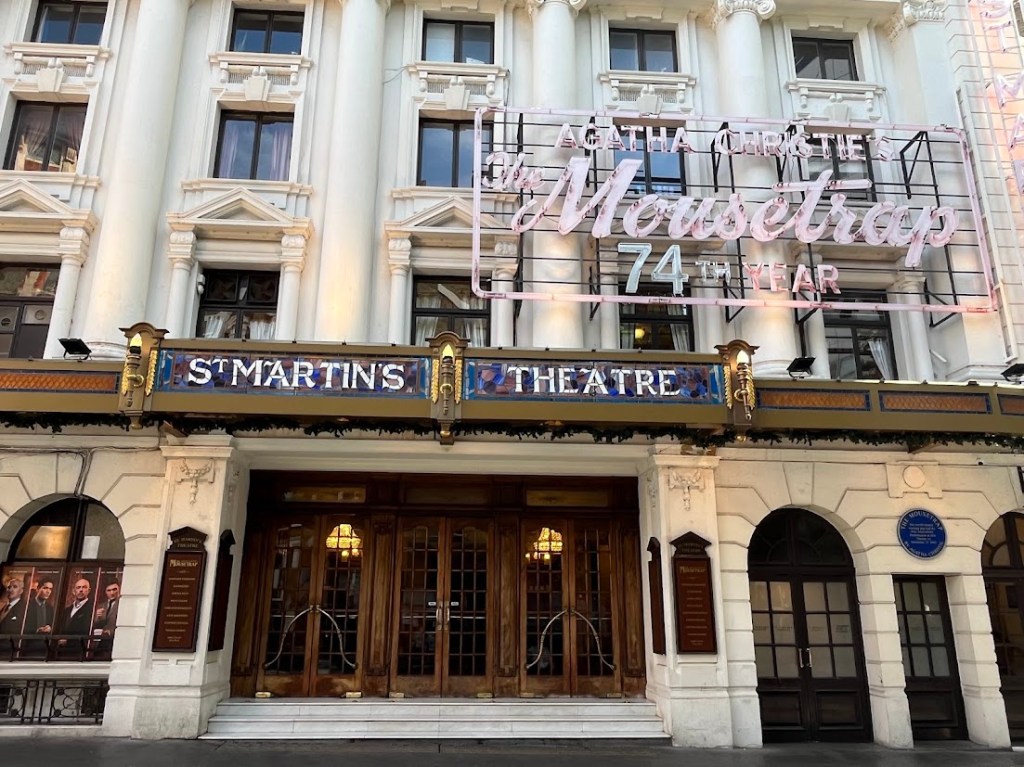
My first experience of seeing The Mousetrap at the theatre was unforgettable. It was in 2012, in a crammed theatre in Edinburgh on the play’s first UK tour since its opening in 1952. My seat was in an area commonly referred to as ‘the cheap seats’ and my view of the stage was slightly obscured so that I had to sit forward just to be able to see the stage fully. Not that I minded, as an Agatha-obsessed superfan, I was happy just to be there. From the moment the curtain went up, I was in a classic crime bubble that I didn’t want to burst, and I left the theatre with an even greater appreciation for the genius of Agatha Christie.
My reaction to seeing The Mousetrap is not unique. It has been replicated over and over again by the millions of people who have also sat on the edge of their seats (physically and metaphorically) and seen the performance. In the introduction to the special 70th Anniversary edition of the play that was published by Hachette in 2023, crime writer and Agatha fan Sophie Hannah describes a similar awe-inspiring reaction to her first viewing of The Mousetrap. Clearly there is just something about the play that resonates with audiences.
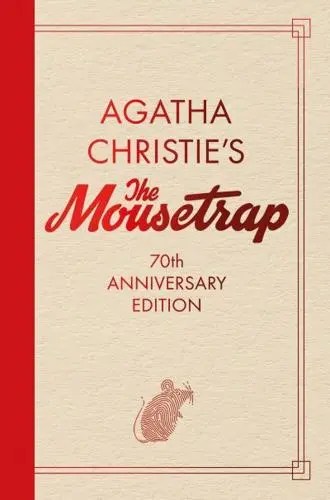
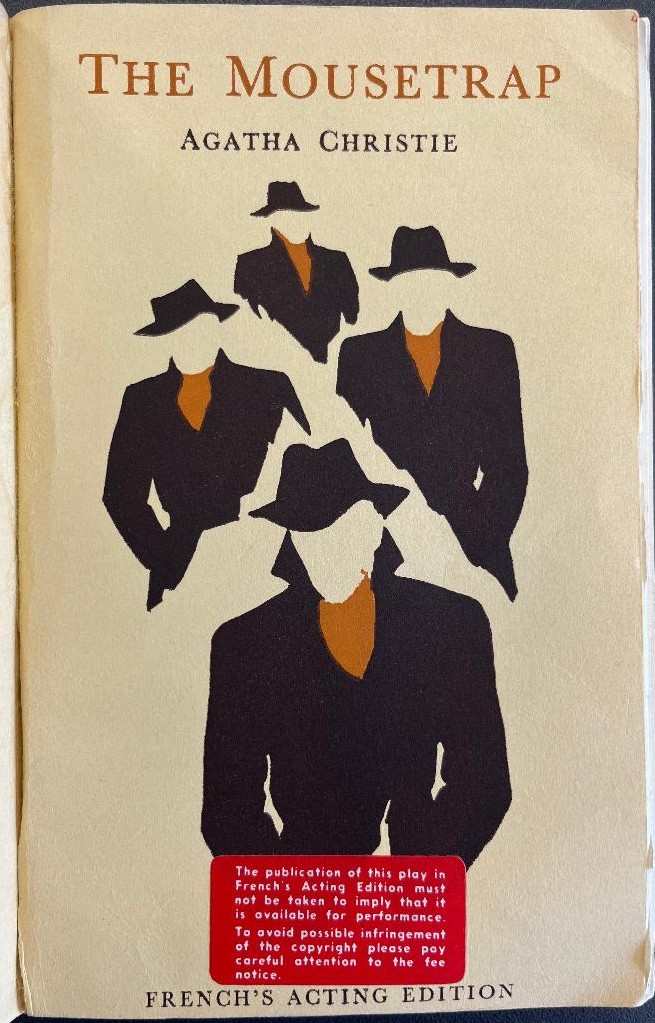
Left: 70th Anniversary edition of The Mousetrap, 2023. Right: French’s acting edition 1954.
The Mousetrap is undeniably Agatha’s most well-known play. The storyline is a classic whodunnit, set in the seemingly idyllic country guesthouse, Monkswell Manor, and featuring a cast of thoroughly English suspects (as well as the typical ‘foreigner’). These lodgers get snowed in while news of a killer on the loose in London blares from the wireless. It is atmospheric, claustrophobic, and has the sort of ending that only a Christie story can really deliver. Every performance of the play finishes with the same appeal by the actors to the audience- ‘now that you have seen The Mousetrap, you are our partners in crime and in order to preserve the tradition of The Mousetrap, we ask you to keep the secret of whodunnit locked in your hearts.‘1
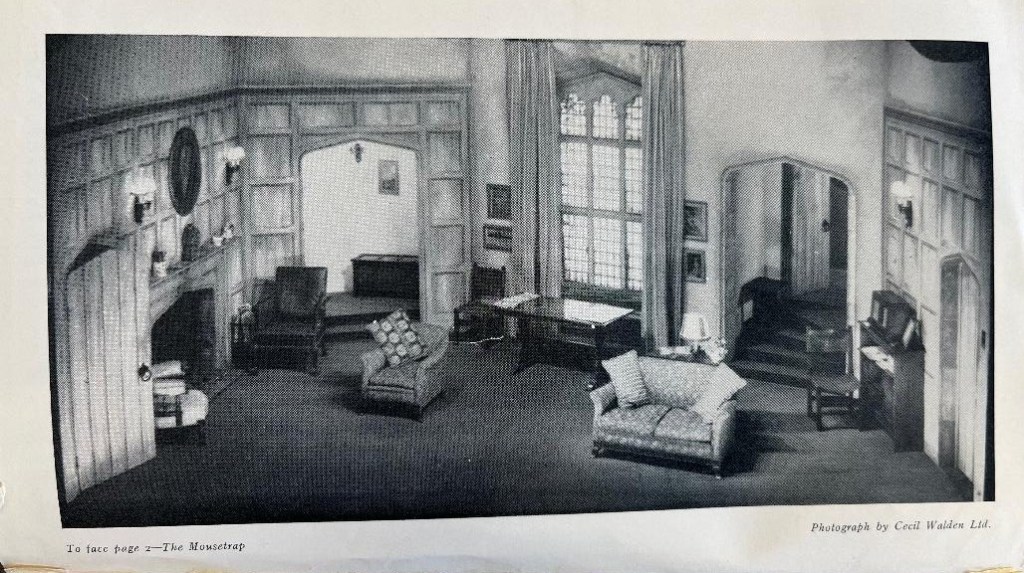
This appeal has resonated with audiences for over seventy years, inviting them into the tradition of the play, but also playing on one of the main drawcards of golden age detective fiction. The genre often presented itself as a puzzle that encouraged readers to pit their wits against the detectives to follow the clues and unravel the mystery. This created a relationship between reader and writer, that invited readers into the circle of characters. The appeal at the end of The Mousetrap has a similar effect on audiences, cementing a confidence between the performers and the audience- you have once again been taken into the circle.
A story fit for a Queen
The Mousetrap started life as a radio play, written by Agatha at the bequest of Queen Mary (grandmother of the late Queen Elizabeth II). In 1947 when Queen Mary was asked by the British Broadcasting Corporation (BBC) how she would like the event of her 80th birthday celebrated, she responded that what she would most like would be an Agatha Christie play. The royal family were said to be avid Christie readers (naturally a sign of good taste), and so the BBC commissioned Agatha to write a half-hour radio play. One week after their request, Agatha delivered Three Blind Mice2.
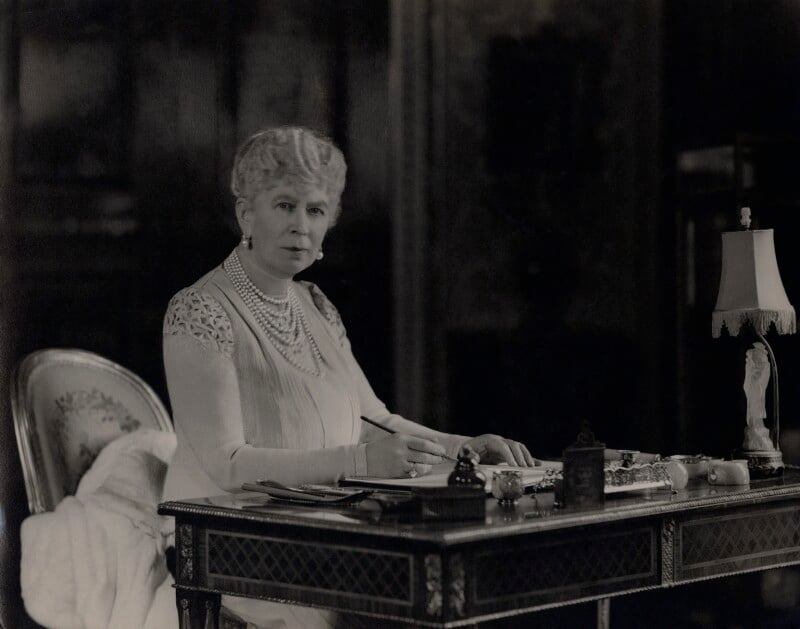
The story of Three Blind Mice continued to ruminate in Agatha’s mind even after the radio play was delivered, and she soon expanded the story into a novella. It was published in the United States as part of a short story collection called Three Blind Mice and Other Stories, as well as in a magazine. In Australia, the story was serialised in The Australian Women’s Weekly in 1949, with full page colour illustrations to accompany it. Readers in the United Kingdom were to miss out however, as Agatha was in the process of morphing the novella into something else- a full length play for the West End.
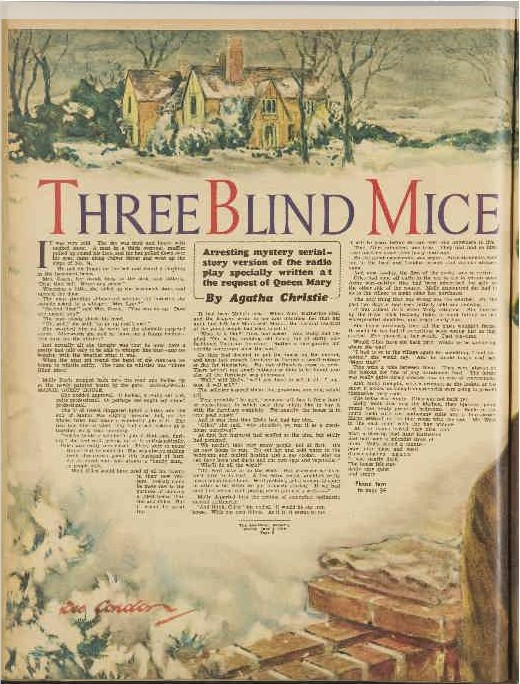
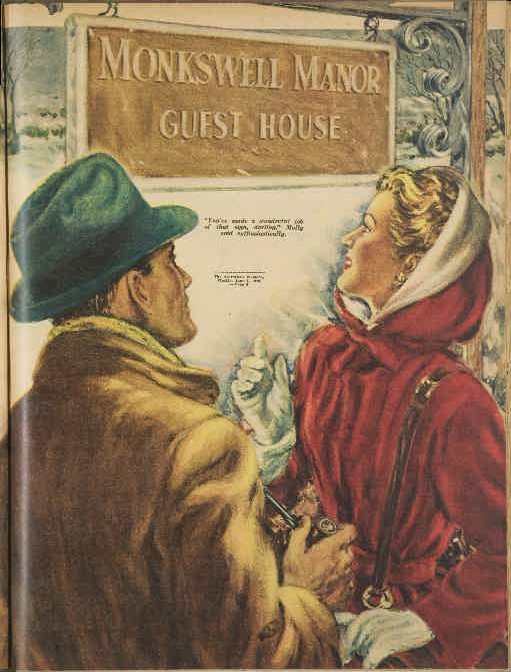
The Australian Women’s Weekly, 4 June 1949.
To the stage
Just after Christmas in 1951, Agatha Christie was having lunch at The Ivy restaurant in London’s West End. Her lunch companion was Peter Saunders, the theatrical producer who had already taken her plays Murder at the Vicarage and The Hollow to the stage. Over coffee, Agatha presented him with a parcel wrapped in plain brown paper, and told Saunders, ‘I have a little present for you. Don’t unwrap it until you get back to your office.’3 That present was the full script for The Mousetrap.
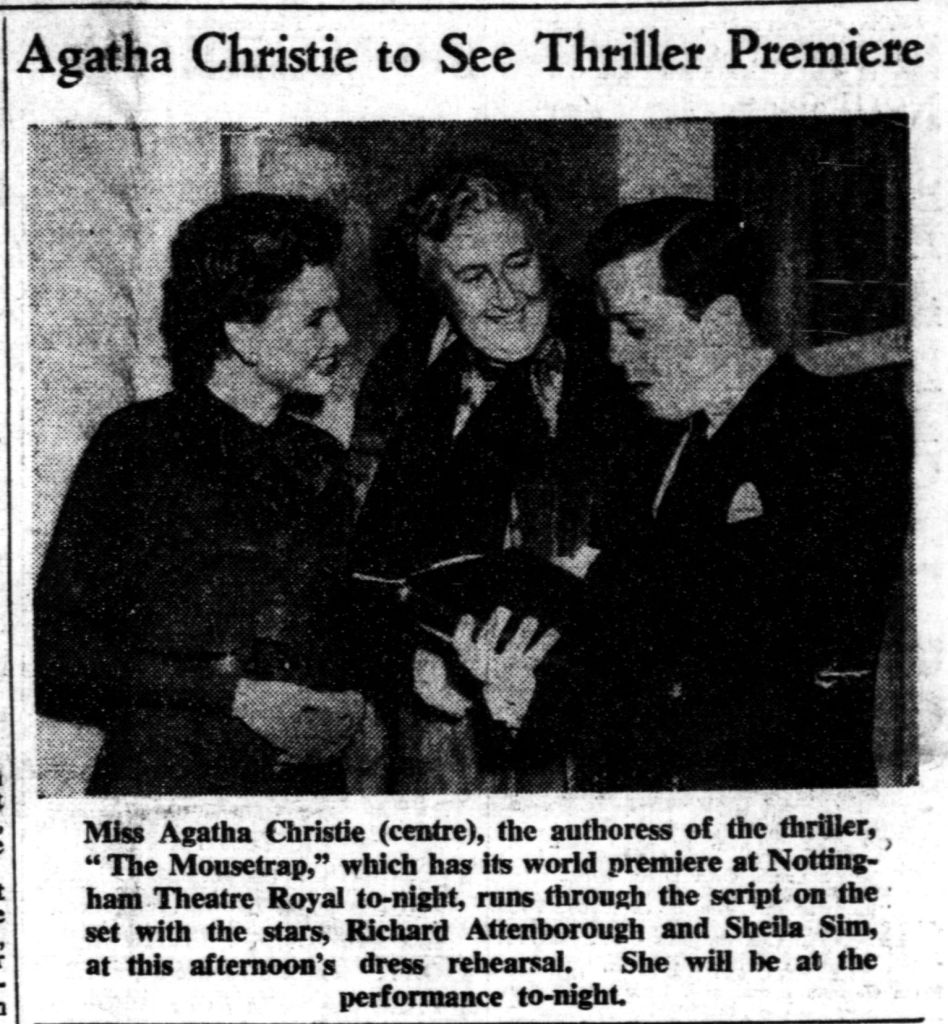
The play was first performed in Nottingham on the 6th of October 1952. After a short tour of England, visiting theatres in cities such as Birmingham, Oxford, and Manchester, the play made its London debut at the Ambassadors Theatre in November 19524. Agatha was convinced that the play would run for eight months if they were lucky, Saunders was more optimistic with a prediction of eighteen months. Both would be proved incorrect. The play received glowing reviews, helped along by the casting of superstar couple Richard Attenborough as Sergeant Trotter and his wife Sheila Sim as Mollie Ralston.
For the record books
The popularity of Agatha as a writer, as well as the expert casting, helped The Mousetrap on its way into the history books. But the PR talents of producer Peter Saunders also helped to keep The Mousetrap in the forefront of people’s minds. Saunders frequently hosted parties at The Savoy to celebrate milestones of the play, inviting celebrities and distinguished guests and orchestrating press coverage. A common feature at these parties was an enormous mousetrap themed cake so large that it had to be cut with a sword.
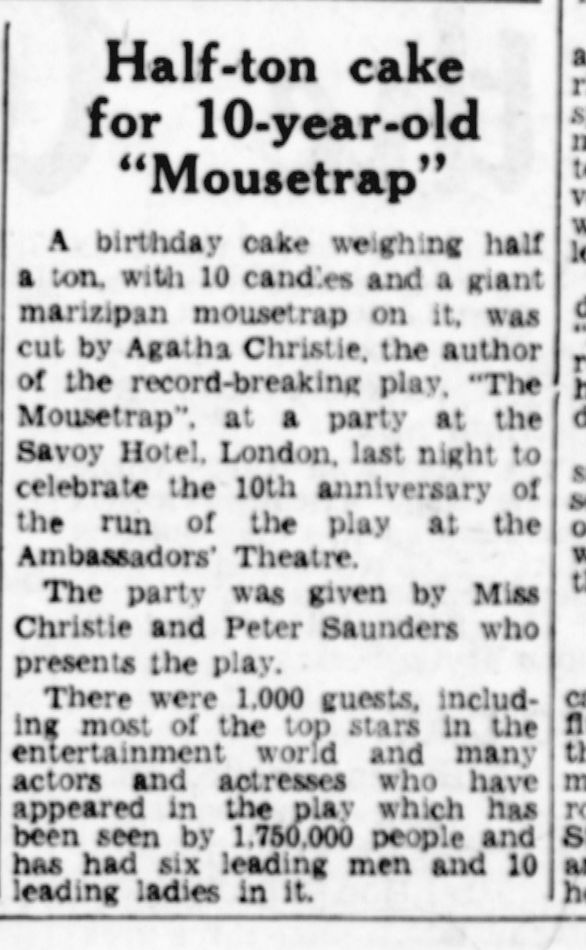
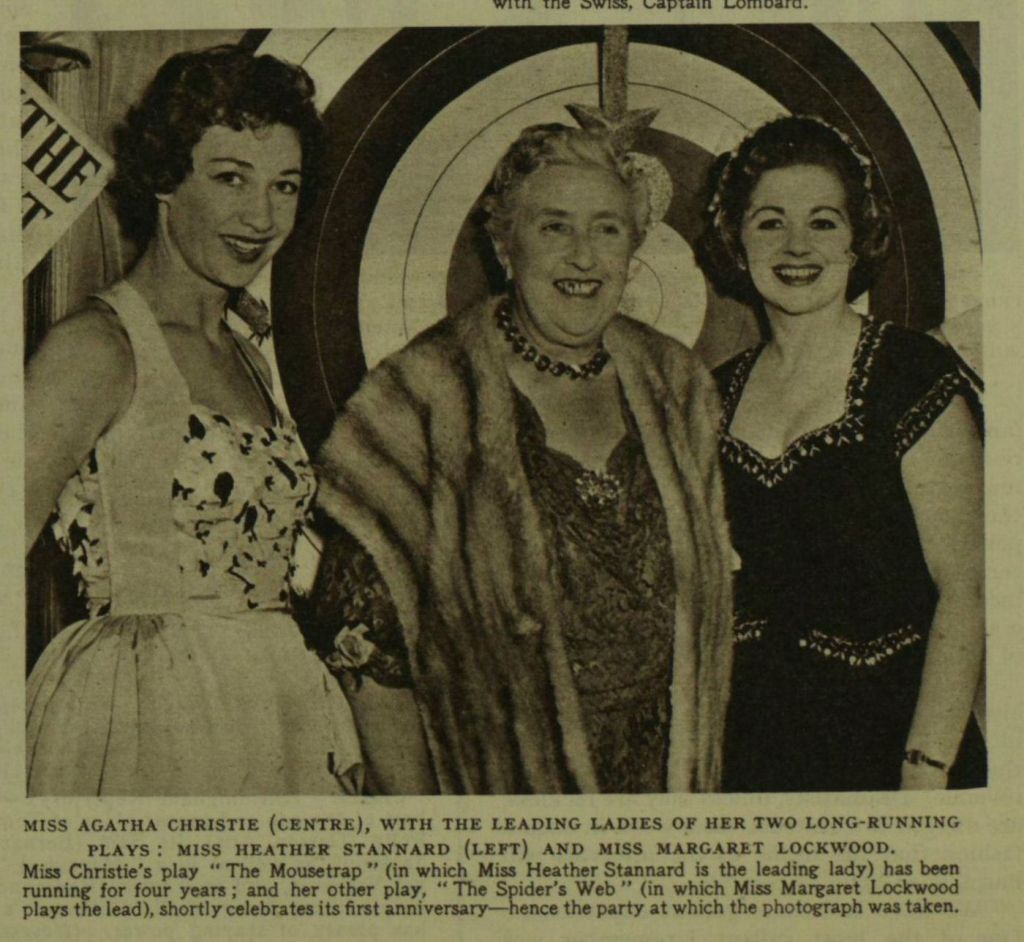
Left: Northern Whig, 26 November 1962. Right: Agatha at one of the theatre parties, Illustrated London News, 3 December 1955.
In 1959, Saunders arranged for the cast of The Mousetrap to put on a special performance of the play at the London prison Wormwood Scrubs. The props and sets were built in advance by the prisoners, and the cast performed to three hundred inmates. The strange setting of the performance would have attracted a newsworthy article, but it was pushed to the front page the following day when news broke that two prisoners had escaped during the performance. They had used the distraction of the play to push some scaffolding against the prison walls and escape to freedom. One of the inmates (David Gooding) was recaptured ten days later in Peterborough, while the other (John Meyers) was still at large at the end of the year.
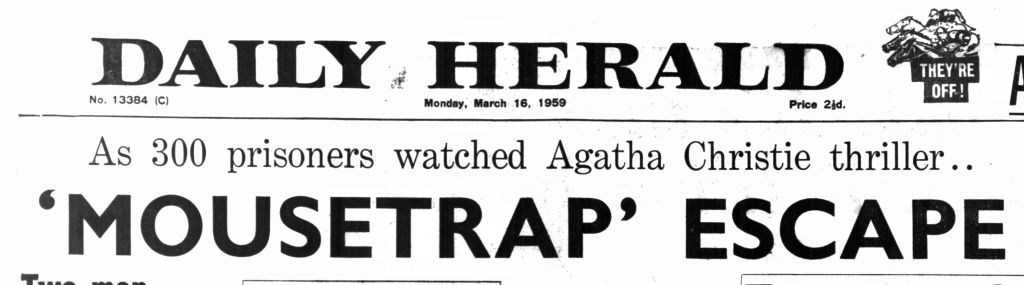
By the time the play moved from the Ambassadors Theatre to the larger St Martin’s Theatre next door in 1974, it had already broken records as the longest running play in theatrical history. The good press continued in 1981 when it became the first play on the West End to have a special sign-language interpreted performance for deaf people. This event took place on the 14th of May and featured six interpreters, with the Royal National Institute for the Deaf saying that they hoped the special performance would ‘lead to other similar opportunities for deaf people to be able to go to the theatre- something which the rest of the population takes for granted.’5
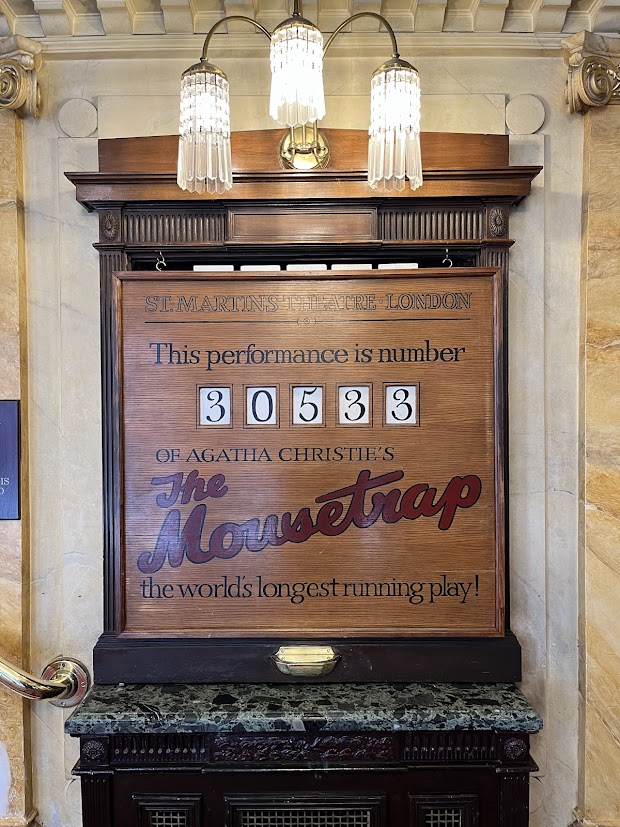
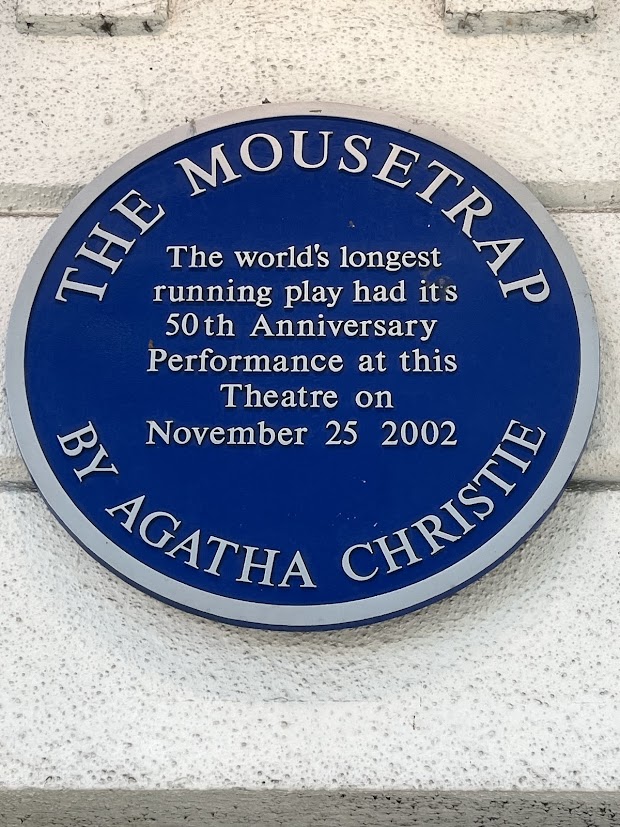
Left: Inside St Martin’s Theatre showing how many performances there have been. Right: The blue plaque on the outside of St Martin’s Theatre.
When asked in 1965 what she thought the ongoing appeal was of The Mousetrap, Agatha replied ‘there is a bit of something in it for almost everybody, people of different age groups and tastes can enjoy seeing it.’6 This sentiment was shared by Peter Saunders who believed that the inter-generational appeal contributed to the play’s success with theatre-goers being taken as children, then taking their own children and grandchildren to the play in later years7. For me, it is the appeal of a classic Christie whodunnit. Since my first trip to see The Mousetrap in 2012, I have been twice more to see the play at different venues. Even though I know the story and know ‘whodunnit’, I still fail to see all the clues, and always leave with the same impression that I had when I first saw it- that Agatha Christie was a genius.
References
- Christie, A (2023), Agatha Christie’s The Mousetrap: 70th anniversary edition, Hachette, London, p 149 ↩︎
- Osborne, C (1982), The life and crimes of Agatha Christie, William Collins and Sons, London, p 145 ↩︎
- Saunders, P (1972), The Mousetrap Man; with an introduction by Agatha Christie, Collins, London, p 117 ↩︎
- As above, p 166-167 ↩︎
- Christie, A (2023), Agatha Christie’s The Mousetrap: 70th anniversary edition, Hachette, London, p 195 ↩︎
- Osborne, C (1982), The life and crimes of Agatha Christie, William Collins and Sons, London, p 168 ↩︎
- Christie, A (2023), Agatha Christie’s The Mousetrap: 70th anniversary edition, Hachette, London, p 191 ↩︎






Leave a Reply