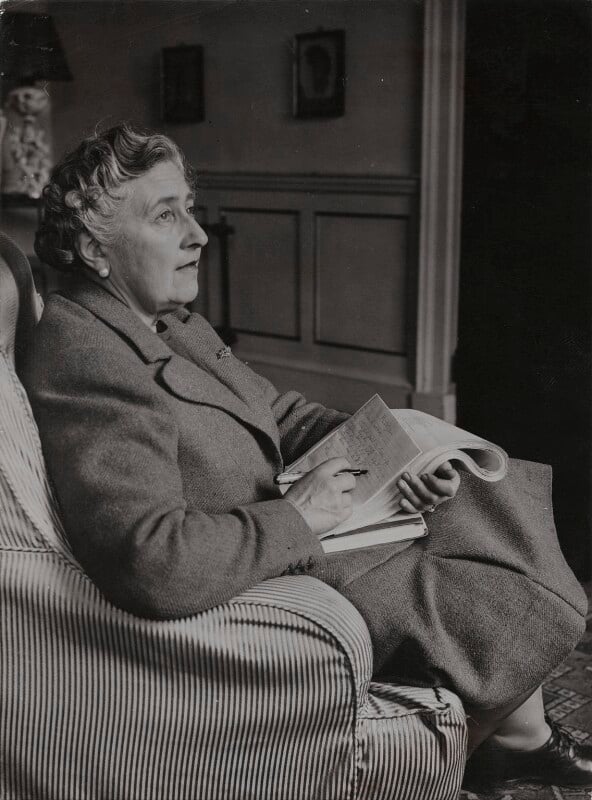
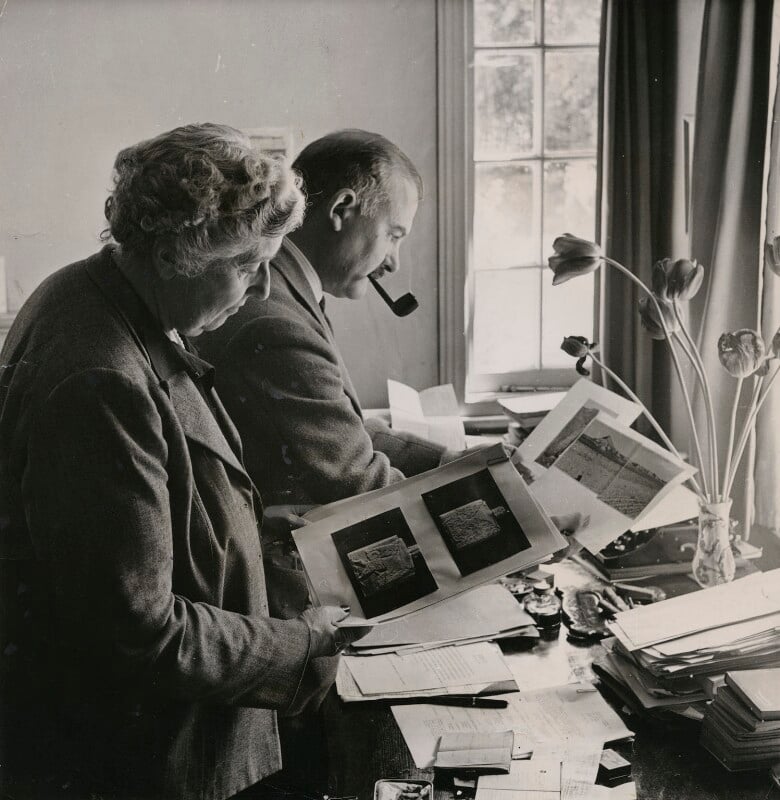
National Portrait Gallery, London. NPG x199287
On the 3rd of September 1939, Agatha Christie was at Greenway House, her home in Devon, when an announcement was made over the wireless by Neville Chamberlain, the British Prime Minister.
“I am speaking to you from the Cabinet Room at 10 Downing Street. This morning the British Ambassador in Berlin handed the German Government a final note stating that unless we heard from them by 11 o’clock that they were prepared at once to withdraw their troops from Poland, a state of war would exist between us. I have to tell you now that no such undertaking has been received and that consequently this country is at war with Germany.”
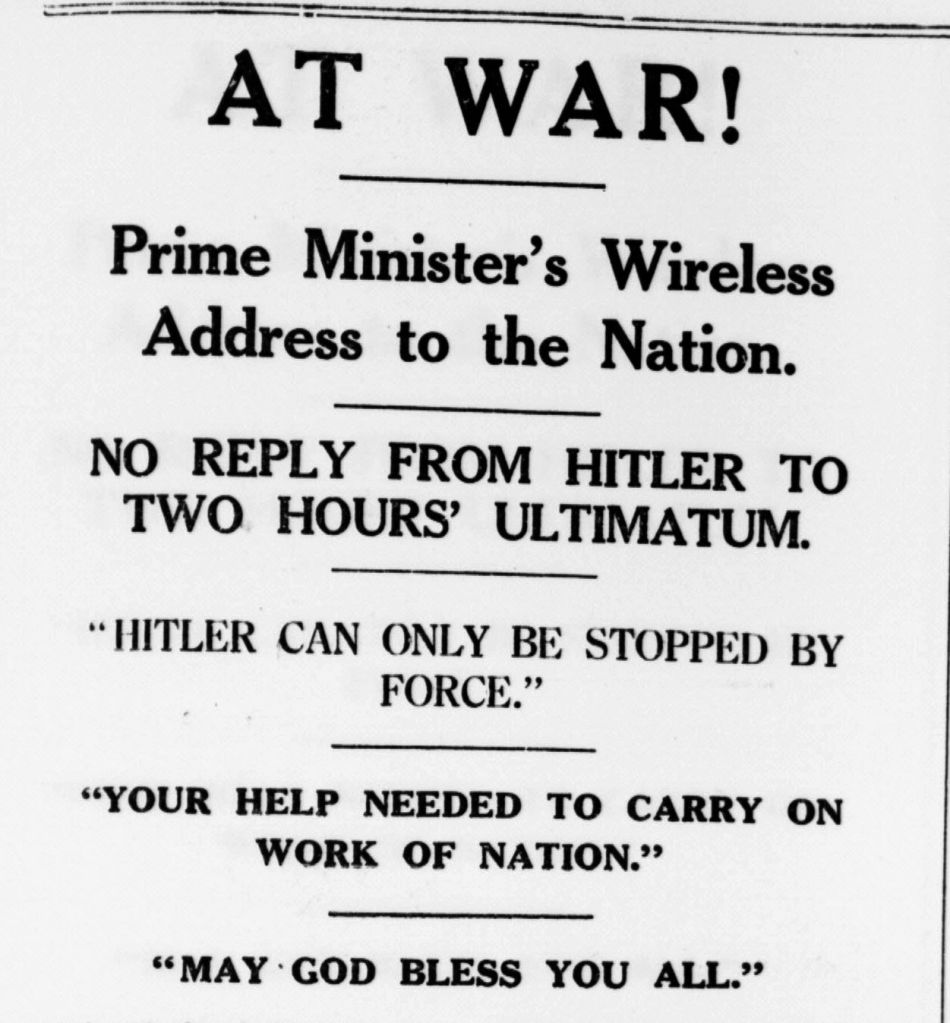
It was not an unexpected announcement. Tensions had been building for some time in Europe and there was a consensus among the British public that conflict was inevitable. Many still remembered the devastation of the First World War, and so when war was announced, felt like they knew something of what was to come. Agatha describes the first few weeks of the Second World War in her autobiography:
“We got organised, more or less, and there we sat, waiting for something to happen. But since nothing did happen, little by little we went on with our own pursuits and some additional war activities.’1
Agatha’s husband Max joined the Home Guard in Devon while waiting for an official war job to come through, and Agatha got on with her writing, which continued at much the same pace that she had maintained for the previous decade. For Agatha, in her idyllic corner of Devon, in her dream house which she had only recently moved into, it was a rather anti-climactic start to the war. But the relative quiet was not to last. The machines of war were churning in London, which was the epicentre of Britain’s war effort. Agatha and Max wanted to do their bit, and so soon moved to London, giving over the use of Greenway to a small group of evacuated children.
Agatha had enjoyed a popularity for the preceding decade, but she soon found her mysteries in even higher demand. Her books regularly appeared on lists of the types of books that servicemen wanted to read2. One newspaper even recommended that setting yourself the task of reading all of Agatha’s novels was a good way of maintaining good mental health during the uncertain times ahead.3
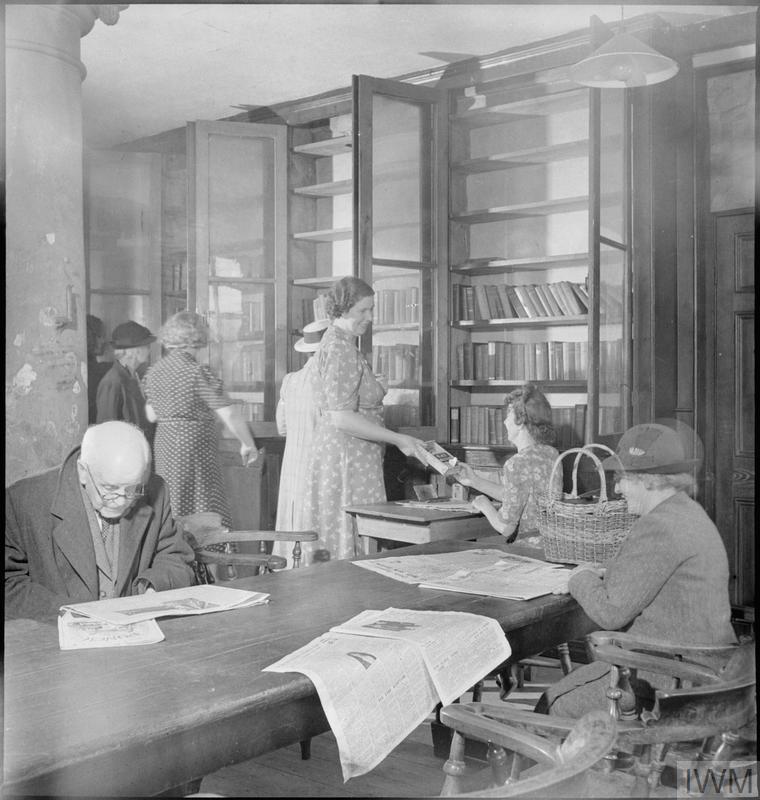
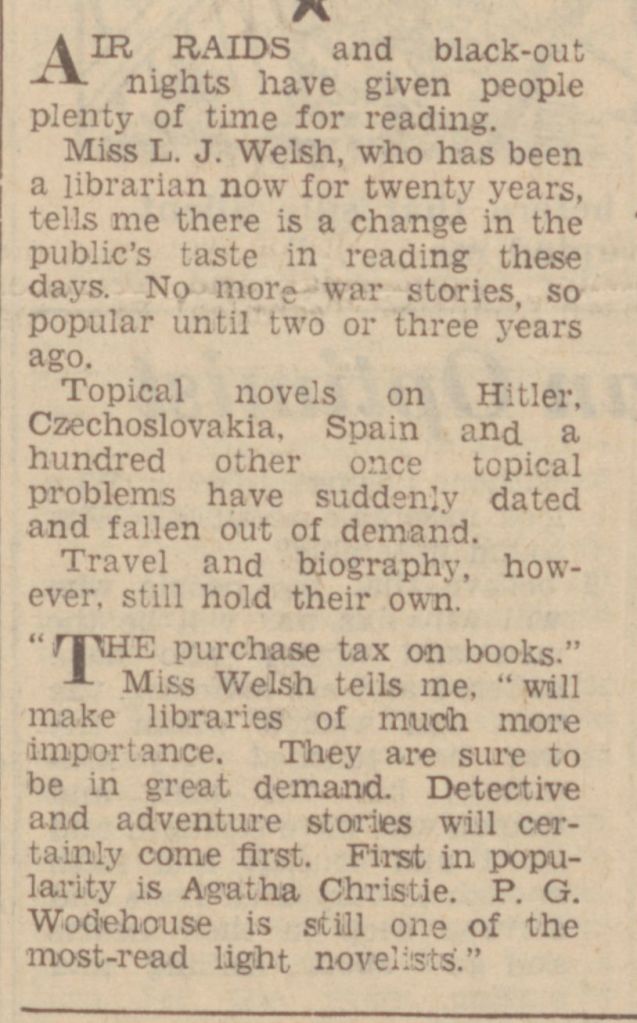
Left: The Reading Room in the Town Hall at Wotton-under-Edge in Gloucestershire in 1944. Image from Imperial War Museums; Right: Newcastle Evening Chronicle, 10 August 1940.
Libraries also saw a spike in popularity, with paper shortages and the cost of books being reasons why people began to frequent their local lending libraries more. And what did the people of Britain want to read while they huddled down in bomb shelters, or when seeking distraction from the anxieties of loved ones abroad? Agatha Christie of course! The familiarity of the English country house settings, of British law and order prevailing, and the puzzle of a mystery, were all ingredients for why Agatha’s novels had been so popular in the lead up to and during the war. They were conversation starters for strangers thrown together to wait out bombing raids, and helped readers escape into a Britain in which justice prevailed.
Writing the war
Agatha only wrote one novel that directly dealt with the war. The Tommy and Tuppence thriller N or M? was published in 1941. It was a bold move for Agatha, as the general mood among readers was that they wanted books that allowed them to escape from thinking about the war, not drag them into it.
In N or M? Tommy and Tuppence are looking for something to do that is useful to the war effort. Tommy is considered too old for any active duty, and Tuppence spends most of her days knitting items to be sent abroad to soldiers. In a way, their forced idleness mimics their debut adventure The Secret Adversary, as both find themselves doing nothing, when they would very much like to be doing something. Tommy is eventually called upon for a secret mission to root out spies connected to a seemingly inconspicuous boarding house on the south coast called San Souci. Not one to be left behind in an adventure, Tuppence tags along. Tommy is given the alias Mr Meadowes , while Tuppence presents herself as a widow, Mrs Blenkensop, whose sons are away fighting on the front.
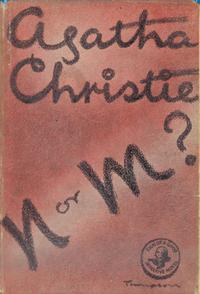
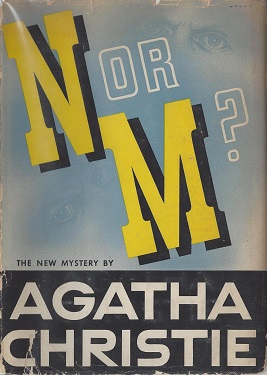
Left: The UK first edition cover of N or M? Right: The US first edition, also published in 1941.
Agatha’s publishers were unsure about the novel when Agatha first presented the manuscript to them. The novel was extremely topical, given its patriotic propaganda messaging, but Agatha’s literary agent Edmund Cork had some convincing to do with Agatha’s American publishers who thought the anti-Nazi sentiment in the novel might offend a substantial section of their readership4. After some to-ing and fro-ing, the novel was published in both the UK and the US, as well as serialised in newspapers.
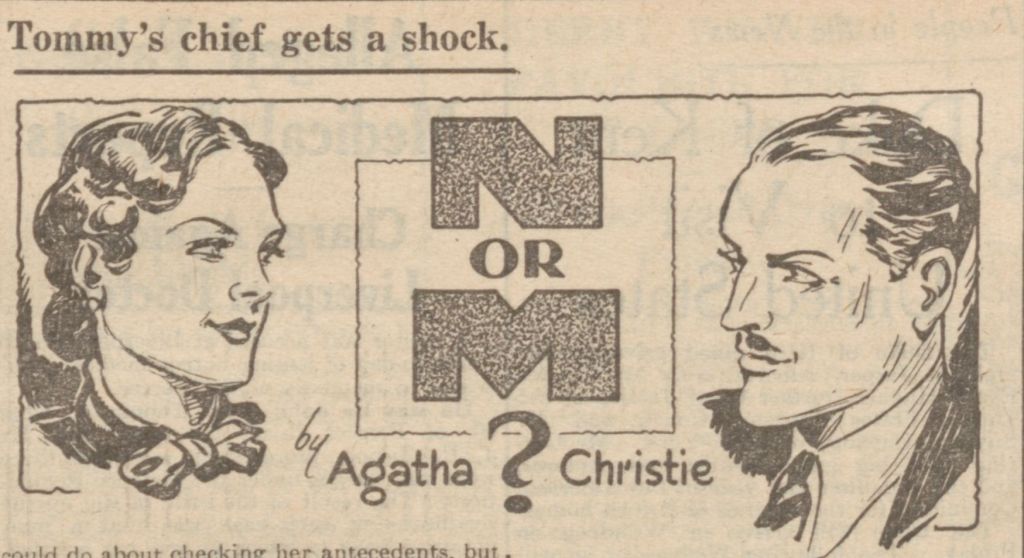
It is perhaps one of Agatha’s less-remembered thrillers, but for researchers, provides an interesting insight into tensions at the time. During the Second World War, Britain was in the midst of a ‘spy craze’, where every foreigner was under suspicion and the British public were encouraged to report any suspicious behaviour by neighbours who may have been helping the enemy. This paranoia, that enemy agents were living among ordinary citizens, put Britain’s Secret Service agencies under a huge amount of pressure. By mid-1940, the Security Service was receiving as many as 8,200 vetting requests per week for individuals. On top of this workload were the thousands of reports of suspicious people or activities that were reported each week, which all had to be investigated5.
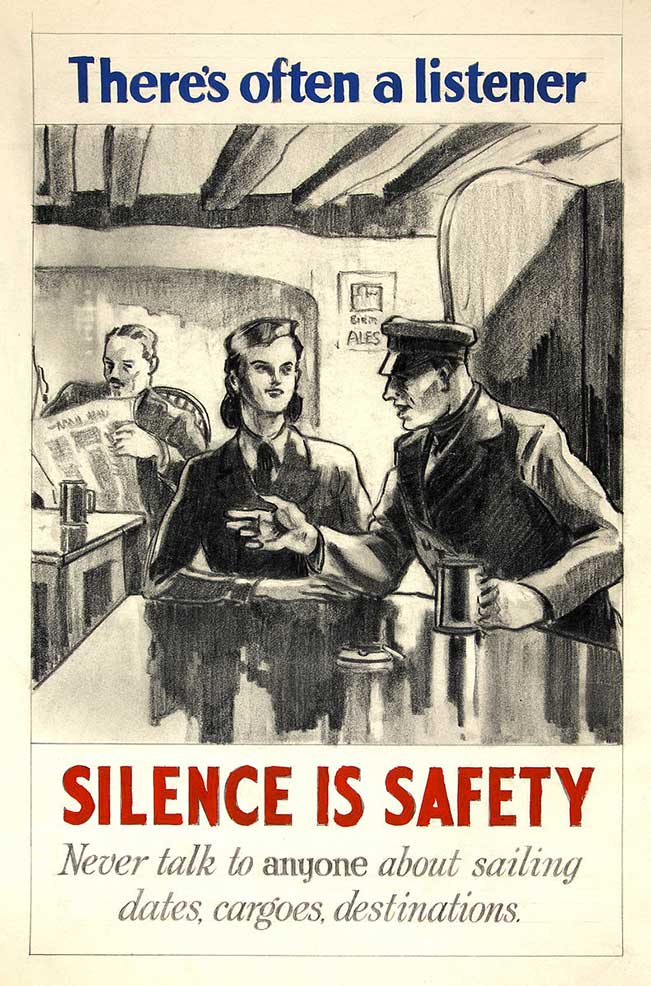
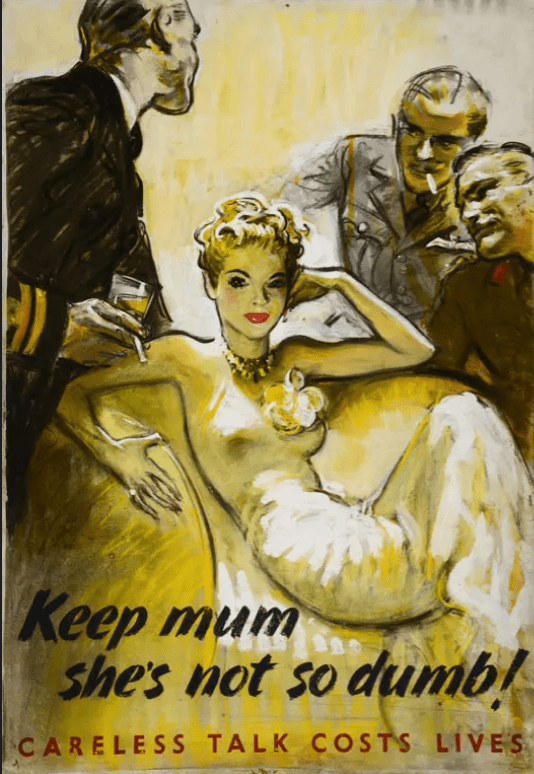
Posters from The National Archives UK related to spies
Censorship and suspicions
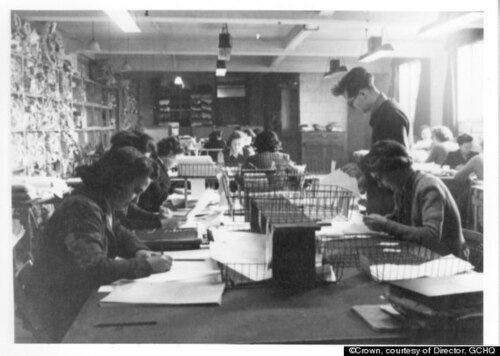
The spy fever gripping the imaginations of Britons reached Agatha in an amusing way after the publication of N or M? when Agatha found herself being investigated by MI-5. The problem? One of the main characters in Agatha’s spy thriller was named Major Bletchley, and at the time Bletchley Park was the new home of Britain’s top secret codebreaking division. According to the author Jared Cade, who wrote the book Secrets from the Agatha Christie Archive, one of the codebreakers, named Dilly Knox, invited Agatha to tea and ‘asked her casually why she had called one of her characters Major Bletchley.’6 It must have been a tense situation for Knox and the other MI-5 agents, waiting to hear if Britain’s most popular author of detective stories was revealing secret information to the enemy through her book. It seems both completely implausible and also the perfect disguise. And yet, Agatha’s answer was simple. She had once been stuck on a train at Bletchley on her way from her home Winterbrook, near Oxford, enroute to London. A perfectly innocent coincidence of names. Knox and MI-5 must have let out a collective sigh of relief.
While Agatha maintained her popularity in Commonwealth countries and the United States during the war, Italian and German readers were to miss out on her latest novels. A few months before the outbreak of war, Italy banned books by Agatha Christie and Edgar Wallace, another writer of detective fiction. In 1941, Germany banned imported detective fiction as they did not want their people to ‘stuff their heads with foreign nonsense.’7
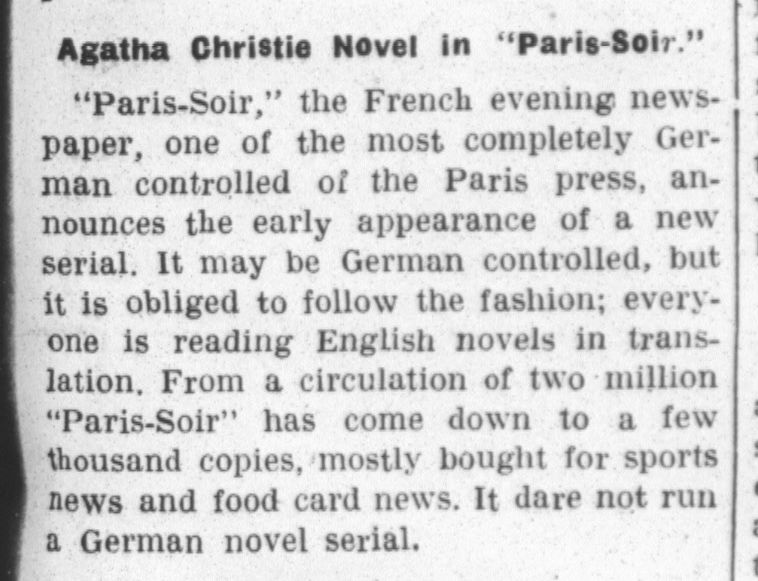
In 1942, despite German occupation, the French publication Paris-Soir published a serialised version of an Agatha Christie novel, likely her newest title Five Little Pigs. It is interesting to note, that even after the war ended, countries such as Germany and Italy continued to edit and censor Agatha’s books for many years afterwards8. For a deep dive into Agatha’s Italian publishing history, I highly recommend the ‘Collecting Christie’ website and article here.
Remembering the war
Agatha spent much of the war in London, writing and working in the dispensary of University College Hospital. In her autobiography she explains the ease with which her stories came to her, even under the stress of wartime Britain:
‘I never found any difficulty in writing during the war, as some people did; I suppose because I cut myself off into a different compartment of my mind. I could live in the book amongst the people I was writing about, and mutter their conversations and see them striding about the room I had invented for them.’ 9
Agatha seems to have embodied the British mentality of ‘Keep calm and carry on’. As fighting continued, she wrote her last Poirot novel, Curtain, and last Miss Marple, Sleeping Murder, and locked them away in a bank vault. She also signed over the rights to each novel to her daughter Rosalind and her husband Max Mallowan respectively, seemingly getting her life in order in case the worst should happen and she should die in a bombing raid- an event made more likely by the fact that Agatha refused to go down into bomb shelters for fear of being buried alive.10
Her wartime experiences were also marked with personal highs and lows. She was separated from Max for much of the war after he was stationed in Cairo, and although the couple kept up a frequent correspondence, Agatha searched fruitlessly for opportunities to join him abroad. Agatha’s daughter Rosalind also gave birth to her son (Agatha’s only grandchild), Mathew, during the war, but tragedy struck when Rosalind’s husband Major Hubert de Burgh Prichard was killed at Normandy, leaving her a widow and single mother.
A permanent memorial of the war was left in Agatha’s home, Greenway, which had been requisitioned for wartime use by the US Coastguard in 1942. On the wall in Agatha’s library is a mural painted by Lieutenant Marshall Lee, one of the officers who lived in the house at the time, depicting places that their flotilla had been, including Bermuda, Morocco and even Greenway itself. Agatha asked for the mural to be kept in place when the Coastguard moved out, believing it to be a fitting remembrance of Greenway’s history.
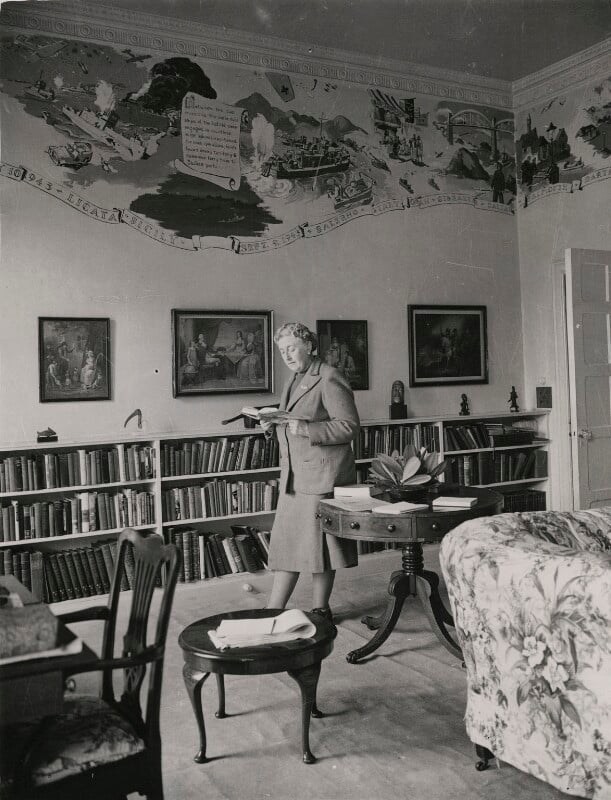
National Portrait Gallery, London. NPG x199288.
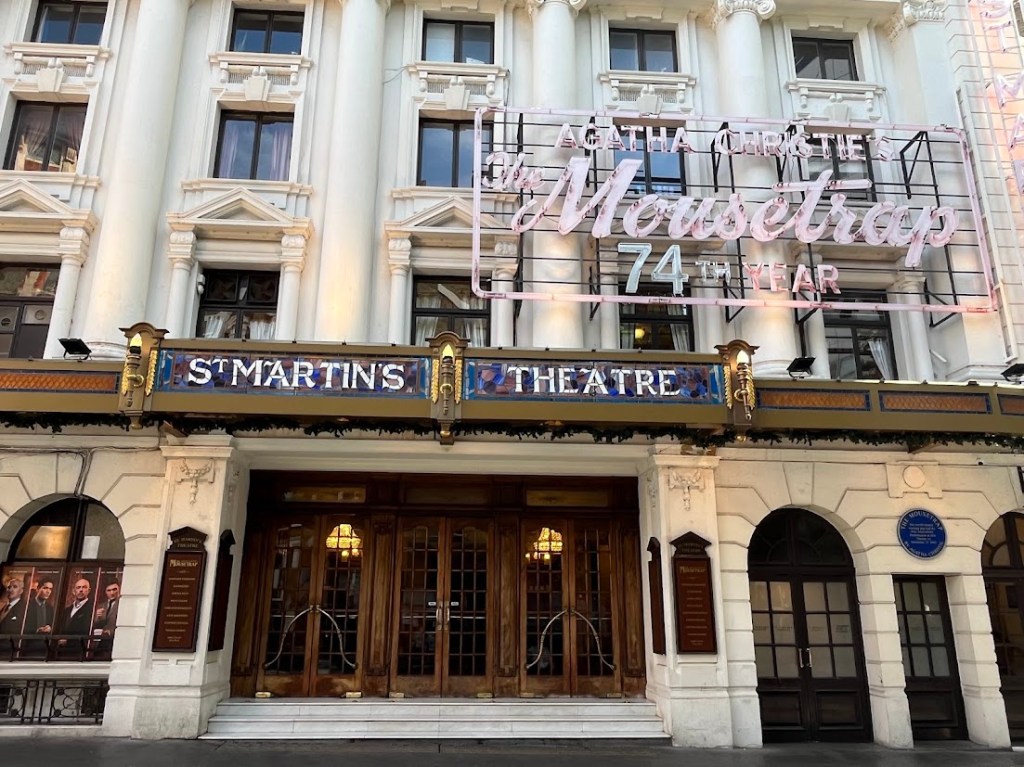
By the time the war ended in 1945, Agatha had published 12 novels. She had also begun to dabble in a new career, that of a playwright. One of her most recognisable creative outputs, the play The Mousetrap, was just on the horizon, and it is this phenomenon that we’ll be exploring in next month’s My year with Agatha.
References
- Christie, A (1977), An autobiography, Collins, London, p 482-3 ↩︎
- The Bookseller, 7th March 1940 ↩︎
- Acton Gazette and West London Post, 29 September 1939 ↩︎
- Morgan, J (1984), Agatha Christie: a biography, Collins, London, p 228 ↩︎
- Secret Service MI-5 (n.d.), World War II. Accessed 15 March 2026. https://www.mi5.gov.uk/history/world-war-ii ↩︎
- Cade, J (2024), Secrets from the Agatha Christie archives, White Owl, Barnsley, n.p. ↩︎
- The Rochdale Observer, 14 April 1945 ↩︎
- Spurio, F (2021), Censura e veleni fascisti: Le traduzioni di Agatha Christie degli anni Trenta (Censorship and Fascist poisons: Agatha Christie’s translations of the 1930s), Issue 21 Autumn 2021. Accessed 15 March 2026 at https://rivistatradurre.it/agatha-christie/ ↩︎
- Christie, A (1977), An autobiography, Collins, London, p 489 ↩︎
- Christie, A (1977), An autobiography, Collins, London, p 486 ↩︎






Leave a Reply