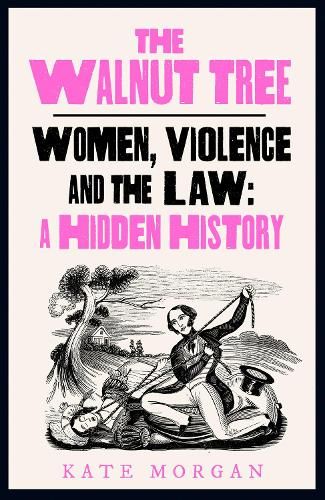
Have you ever stopped to think about what life was like for women fifty, one hundred or even one hundred and fifty years ago? I often do. Many of the books that I like to read are historical, and it never ceases to amaze me (or perhaps shock me?) some of the laws and societal expectations that confined, restricted and degraded women to either the property of their husbands or the property of male family members.
Across the historical romance genre we see a smattering of the realities faced by women in the Georgian, Victorian and Edwardian periods. For example, in Jane Austen’s Pride and Prejudice, Charlotte Lucas chooses to marry the odious Mr Collins rather than stay a spinster with an uncertain future. ‘Marriage or misery’ is how Charlotte Lucas in the recent tv show The Other Bennet Sister, justified her decision.
In Kate Morgan’s, The Walnut Tree, marriage and misery are explored. You might think that a book about violence against women and the laws that protected their abusers from prosecution, might be heavy reading, but Morgan presents her case studies in a way that makes the stories accessible. She shares stories of brave women whose suffering led to significant changes in English law, improving the lives of women for generations to come. These women used their misfortunes and their miseries, to change laws and perceptions about the rights of women over their money, their bodies, and their agency.
While all of the case studies were shocking to read, the story that I found most compelling was that of Emily Jackson, a spinster who had married a man who turned out to be a gold digger and a brute (to use an era- specific insult). Her story would become famous at the time under the newspaper headlines of ‘The Clitheroe Abduction Case’.

After their marriage, Emily and Edmund Jackson had intended to emigrate to New Zealand, and Edmund went out to prepare a home for them. In his absence, Emily started to have second thoughts about both her husband and moving to New Zealand. By the time her husband returned, Emily was quite happy to give up the notion of wedded bliss and decided to stay living with her sister in Clitheroe, a village in Lancashire.
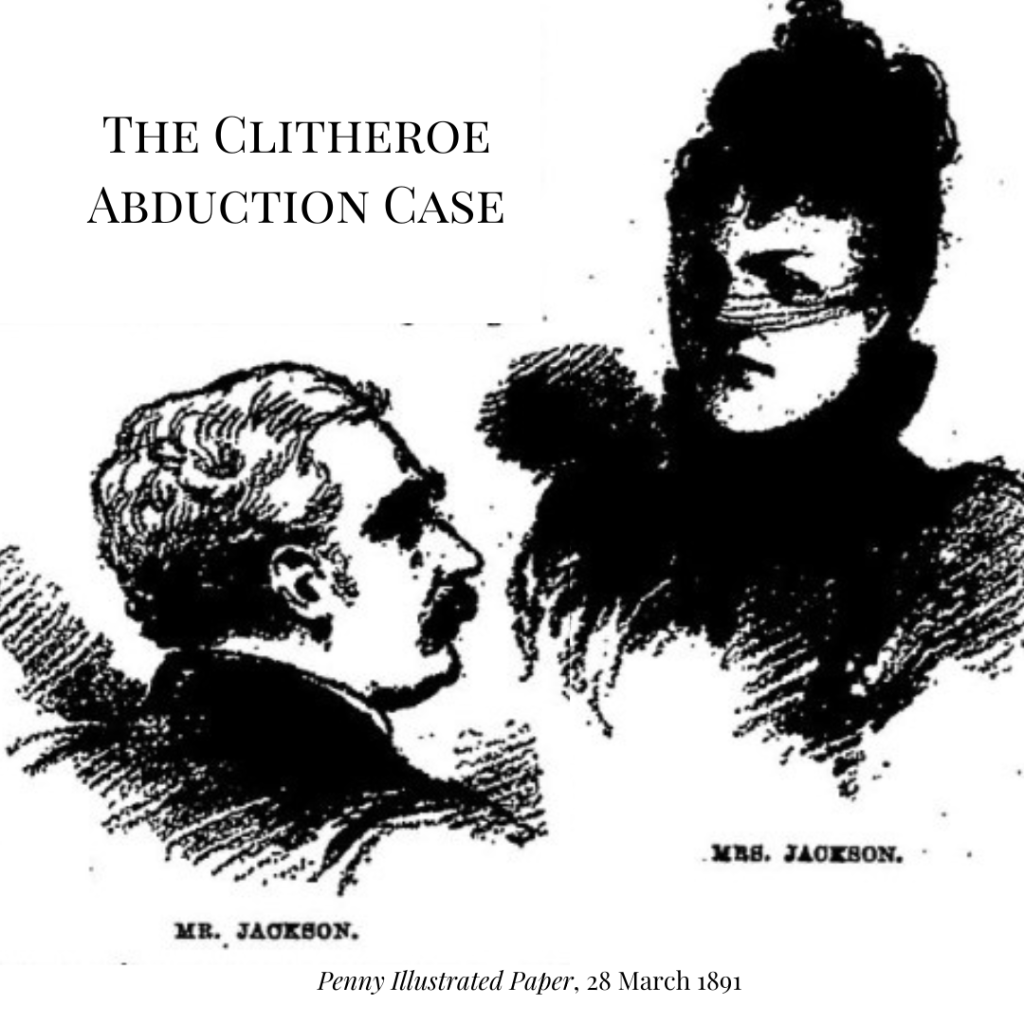
Edmund was incensed that his wife no longer wished to set up house with him (and he was also no doubt angry that easy access to her considerable inheritance had been cut off from him). One day, as Emily was walking home with her sister from church, Edmund and two accomplices attacked Emily and her sister, pushing Emily into a waiting carriage. They took her to Edmund’s home in Blackburn and imprisoned her in the house, denying her access to her family and friends, as well as any option to leave the premises.
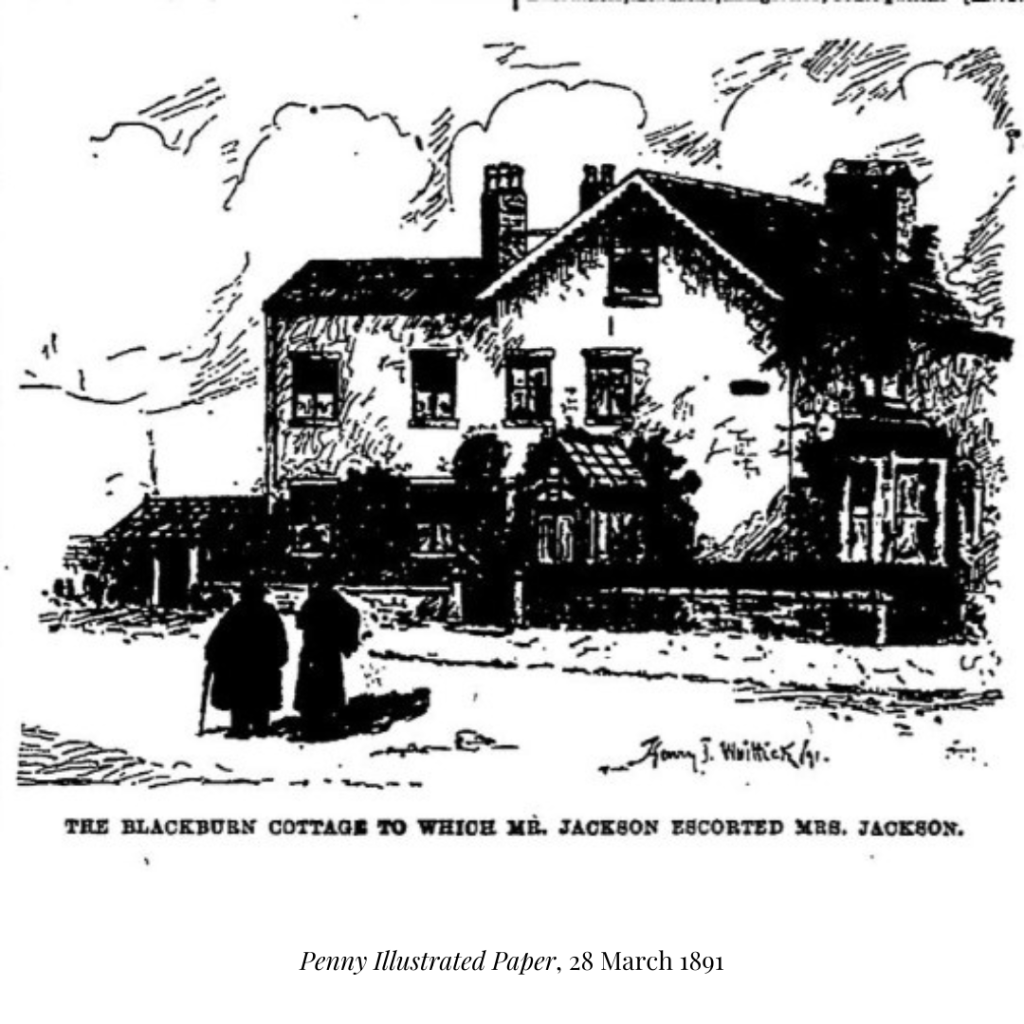
In the sketch of Mr Jackson’s home that appeared in the Penny Illustrated Paper, you might notice that the caption that the editor chose to use is quite telling of the general view of the situation. According to the paper, Mrs Jackson was ‘escorted’ to her marital cottage. In reality, she was assaulted and kidnapped.
To modern readers, the abduction of a woman in broad daylight in front of witnesses who did little to intervene, appears shocking, and you might immediately think that the police should have been called to rescue the victim. Unfortunately for Emily, the police, courts and public consensus at the time was that a woman was the property of her husband and that he had ‘a right to the custody of his wife, and if necessary to secure and detain her.’1 The injustice of it, and the sexist ideologies that allowed a woman to be kidnapped and detained, had me nearly yelling in frustration as I read the book. Emily Jackson deserved better than that. All women deserve better than that.
Emily’s story is just one of the many case studies written about in Morgan’s book. Up next, was a deep-dive into the practice of men selling wives they no longer wanted. Just when I thought the Clitheroe Abduction case was the biggest shock I was going to read, along came the case of a man who paraded his wife through a marketplace tied to the end of a rope, hoping to sell her to the highest bidder. It seems absolutely outrageous, and yet no one in the marketplace batted an eyelid at the degradation of a woman to little more than cattle.
Morgan’s book has been sitting on my (rather large) ‘To Be Read’ pile for a while, but I’m really glad that I finally dived into it. The stories are shocking, disturbing, and are guaranteed to have you shouting your outrage at what women have had to endure. But the book also makes you thankful for the hard fought advances that the women in Morgan’s book inspired. Changes to law can be slow, but this book is a fascinating journey into history and how far we have come and how far we still have to go.
References
- The Lough and North Lincolnshire Advertiser, 21 March 1891, p 7 ↩︎



 In the library with Mel
Leave a comment