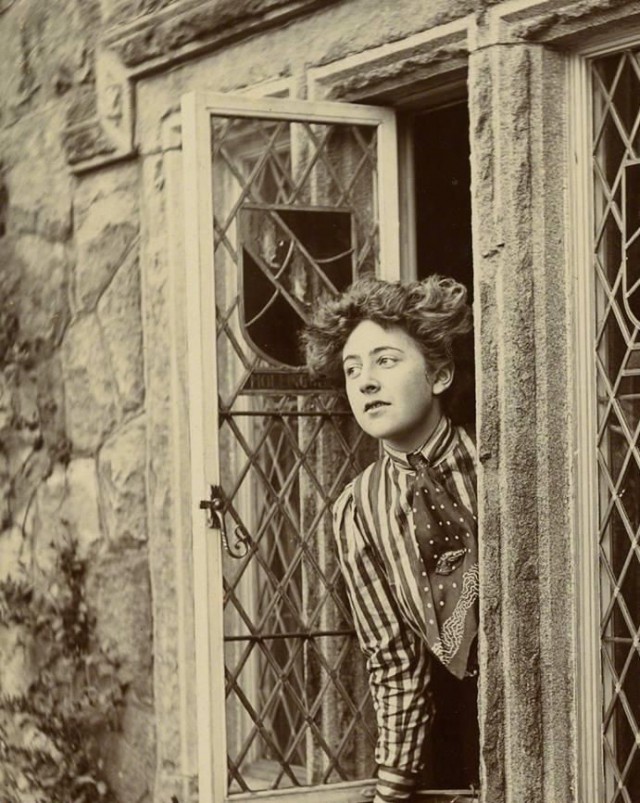
In 1908 Agatha Christie reached the age when young women were expected to make their society debut with a ‘coming out’ season. London was the premier location for a young woman hoping to make a financially desirable match, but the number of dresses required for the many balls made it an expensive endeavour. Agatha’s elder sister Madge had previously ventured to New York for her season in 1895, but the state of the Miller family finances after the death of Agatha’s father in 1901, meant that London and New York were both non-viable options for the young Agatha.
Around the same time, Agatha’s mother Clara developed a mystery illness that had baffled doctors, and it was suggested that she should escape the depths of an English winter and recuperate abroad.1 Egypt became a natural choice, offering a warmer climate for Clara’s health, but also a low-cost option for a ‘coming out’ season for Agatha. At the time, Egypt was a popular destination for English travellers as it was under British influence. There was also a garrison of young soldiers stationed there, which provided plenty of dance partners for young women.2
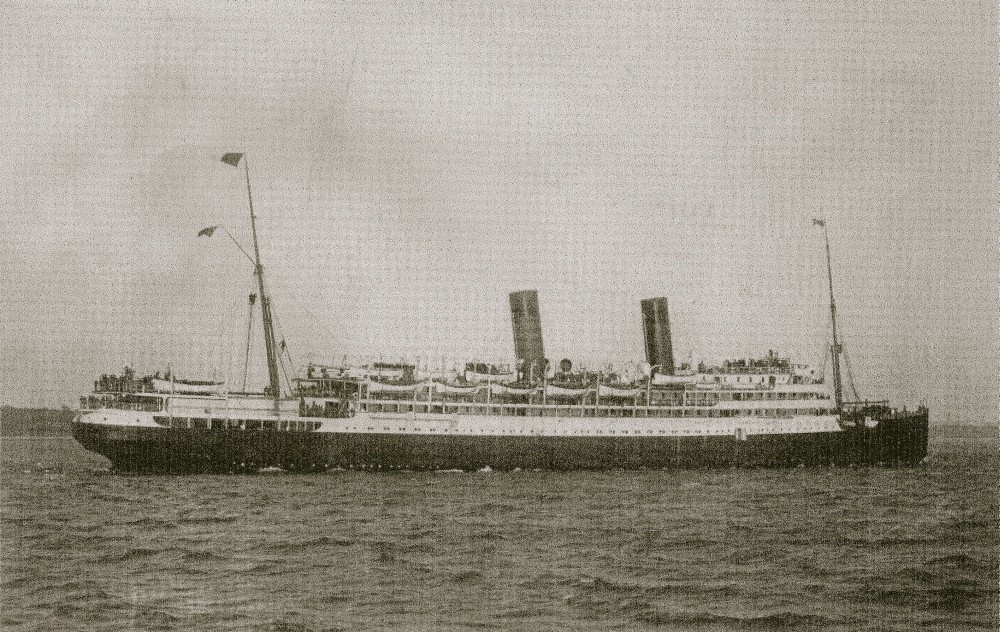
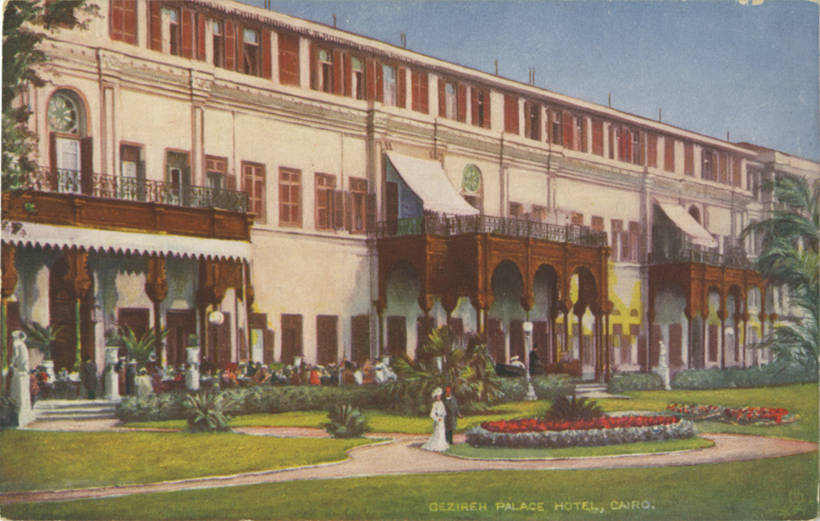
Agatha and Clara sailed to Egypt on board the SS Heliopolis. Upon arrival in Cairo, they checked into the Gezira Palace Hotel for a three month stay. The hotel was a social dream for anyone wishing to throw themselves into society. Its striking exterior and opulent interiors were reflective of its former use as a royal palace. The hotel hosted five dances a week, as well as picnics, polo matches and excursions.3
Young Agatha saw the pyramids and the Sphinx but turned down the chance of a trip down the Nile to Luxor and Karnak, in favour of staying in Cairo to attend a fancy dress ball. In her autobiography, she wrote, ‘The wonders of antiquity were the last thing I cared to see, and I am very glad she [meaning her mother] did not take me. Luxor, Karnak, the beauties of Egypt, were to come upon me with wonderful impact about twenty years later. How it would have spoilt them for me if I had seen them then with unappreciative eyes.’4
Egypt on the page
Agatha was so inspired by her winter season in Egypt that when she got home, she penned her first full length novel, Snow Upon the Desert. The book was set in Cairo and featured characters very loosely modeled on those she encountered during her stay. The biographer Laura Thompson described the novel as a ‘comedy of manners’ although its structure was ‘hopelessly disordered’.5 The novel was rejected by all literary agents Agatha was encouraged to send it to and has subsequently never been published. It exists only as a manuscript in the Christie Archives, and the handful of modern scholars who have been given the privilege of reading it have suggested that unpublished and hidden in the archives is probably where it should stay.
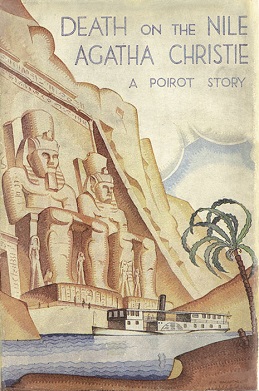
A nod to this long-forgotten teenage manuscript can be found in Agatha’s 1937 novel Death on the Nile. In it, the character Mrs Otterbourne, an eccentric author of romance novels, tells Hercule Poirot that she is in Egypt to write her next novel, Snow on the Desert’s Face. It is hard not to read Mrs Otterbourne as a comedic spoof of Agatha herself, or at least a secret joke put there by Agatha for her own amusement.
Agatha finished writing Death on the Nile in April 19366 after coming back from a winter in Egypt. Fans might be surprised to learn that according to the notebooks Agatha used to plot her novels, Miss Marple was originally tipped to be the story’s detective.7 It’s hard to imagine Miss Marple abroad (even though she does venture to the Caribbean in the 1964 novel A Caribbean Mystery). Thankfully, Christie quickly saw that Poirot was a much more suitable sleuth for the story. He had already been abroad several times, and was therefore an experienced and natural traveller.
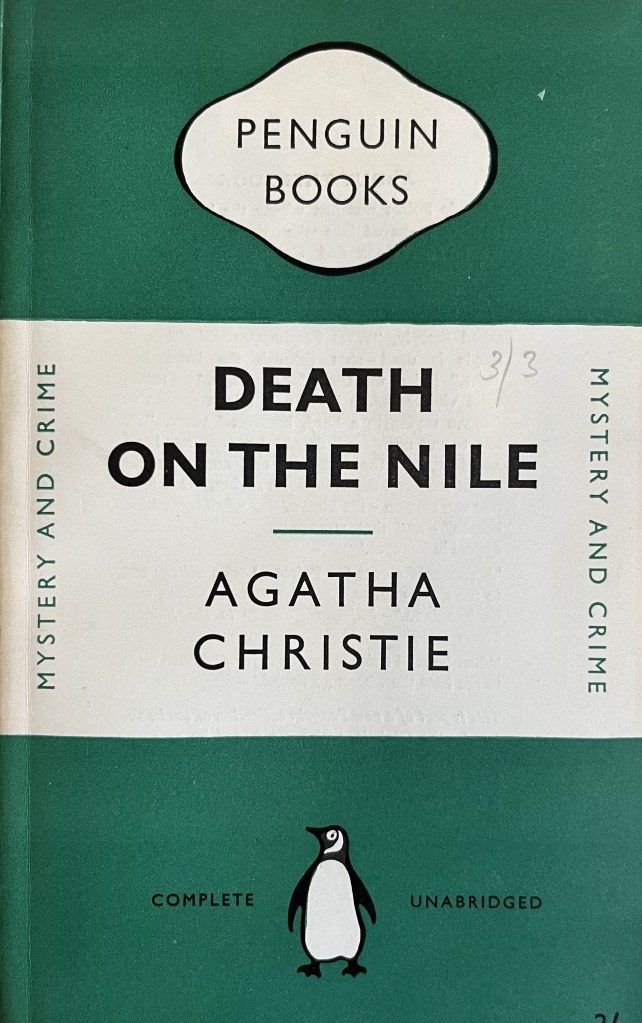
In the Forward for the 1953 Penguin paperback edition of Death on the Nile, Agatha writes fondly about the book- ‘when I read it now I feel myself back again on the steamer from Aswan to Wadi Halfa.’8 She considered it one of her best ‘foreign’ travel books and hoped that readers would ‘escape to sunny skies and blue waters’ from the ‘confines of an armchair.’9 Agatha’s editor Edmund Cork agreed that the story was one of her best, and managed to sell the serial rights to the US publication the Saturday Evening Post for a staggering $18,000.10
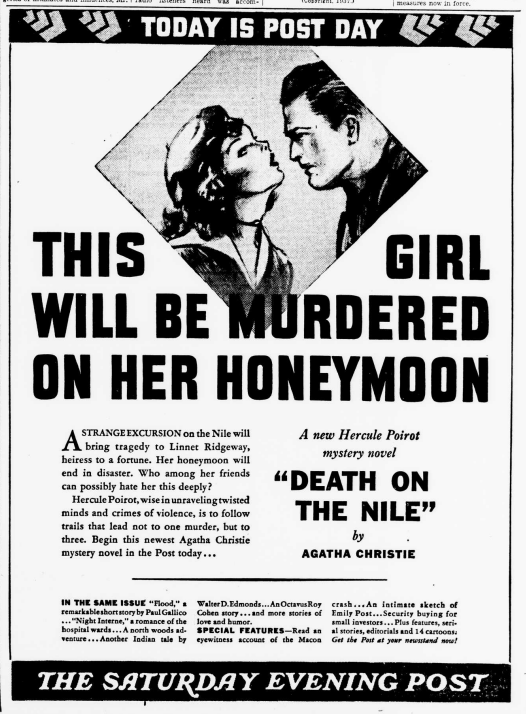
Although Death on the Nile is Agatha’s most well-known story set in Egypt, it was a location that she visited, both physically and in writing, frequently. In the 1923 short story The Adventure of the Egyptian Tomb, Hercule Poirot solves a case of an alleged curse laid upon those who have disturbed the tomb of a Pharaoh. In 1933 Agatha’s great solver of people’s unhappiness, Parker Pyne, takes a cruise on the Nile and is asked to help Lady Grayle discover who is trying to poison her. This short story was also called Death on the Nile, and can perhaps be seen as Agatha testing out her Nile setting. Parker Pyne acts very much like Poirot in the story, so it could be evidence of ideas germinating in Agatha’s head that would later morph into the Death on the Nile novel.
Writing antiquity
Through her archeologist husband Max Mallowan, Agatha developed an interest in ancient civilisations, which had an unexpected impact on some of her writing. Her 1944 novel Death Comes as the End, is a complete departure from all Agatha’s other novels as it is set in Thebes in 2000 BC. It was probably one of the first detective stories set in ancient history.
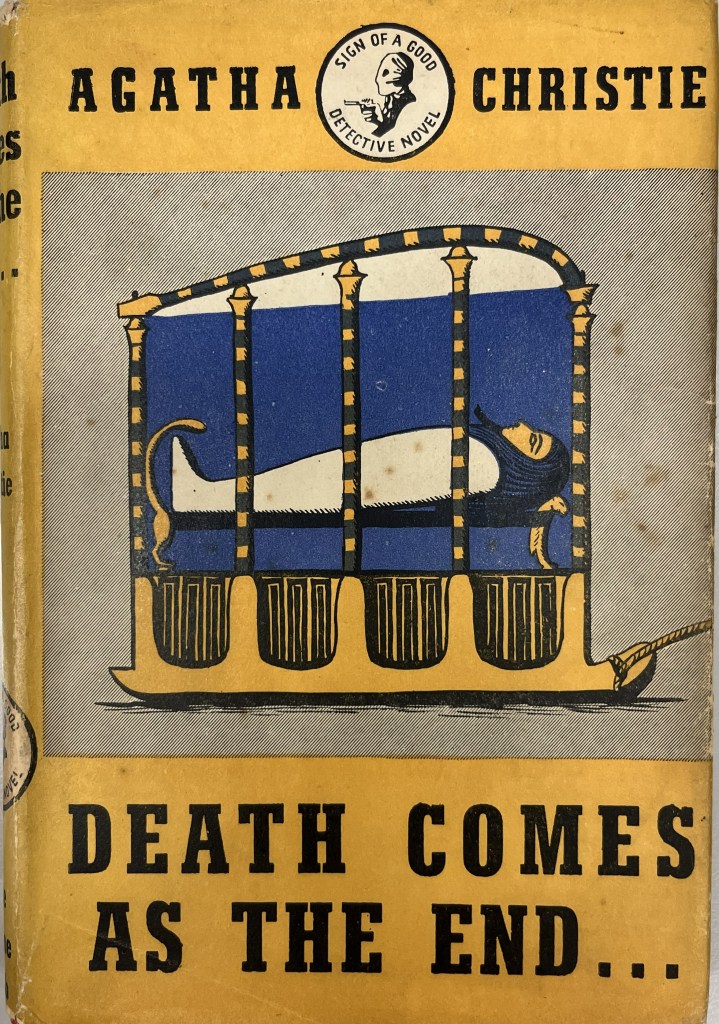
The inspiration for the story came from Mallowan’s friend and colleague Stephen Glanville who told Agatha at dinner one night in the early 1940s that he wished she would write a detective story set in Ancient Egypt.11 Agatha, always one to rise to a challenge, left the conversation ‘fired with enthusiasm’ and went home with eight volumes of books on Egyptology. She then spent the next day ‘quite oblivious of fly bombs which were being particularly active’, and was ‘entranced by the alluring possibilities’.12 Agatha typed the opening chapters of Death Comes as the End in Max’s library at Winterbrook, their home in Oxfordshire, in July 1943. In a letter to Max, who was stationed in Cairo during World War II, Agatha teased that she was writing ‘lowbrow stuff in your highbrow sanctuary’.13
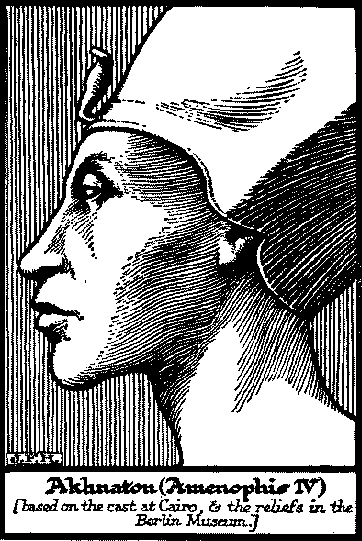
The Egyptologist Stephen Glanville had also helped Agatha in her research for her play Akhnaton, which was written in 1937, but only published in 1973. Max Mallowan called this play, ‘the most beautiful play’ his wife ever wrote.14 Agatha had written it mostly for her own enjoyment and never seriously believed that it would be produced on the stage.15 The story is set in 1350 BC and centres on a young Pharaoh who attempts to convince his nation to give up their pagan beliefs and worship only the sun god, Aton. The story is based on a legend and Agatha was introduced to the story by Howard Carter16, who she and Max had met and formed a friendship with on their many travels to Egypt. According to sources, Agatha and Max used to play bridge with Carter at the Winter Palace hotel in Luxor during their stay there in 1933.17
Agatha’s stories set in Egypt highlight specific moments in the country’s history- the ancient civilisation, and the period of the 1920s and 30s when the uncovering of this ancient past captivated the imaginations of western audiences. The unearthing of Tutankhamun’s tomb by Howard Carter in 1922 sparked a frenzy of interest in Egypt, but it was Agatha who created an aura of romance and exotic luxury travel on the Nile through her writing.
References
- Christie, A (2010), An autobiography, HarperCollins, London, p 166 ↩︎
- Agatha Christie Limited, (2012), ‘Agatha in Egypt’ in The Agatha Christie Book Collection, volume 6: Crooked House, Hachette Partworks, London, p 4 ↩︎
- Christie, A (2010), An autobiography, HarperCollins, London, p 168 ↩︎
- As above, p 171 ↩︎
- Thompson, L (2007), Agatha Christie: an English mystery, Headline, London, p 68-69 ↩︎
- Curran, J (2009), Agatha Christie’s secret notebooks: fifty years of mystery in the making, Harper Collins, London, p 206 ↩︎
- As above, p 207 ↩︎
- Christie, A (1953), Death on the Nile, Penguin, London, p 6 ↩︎
- As above ↩︎
- Aldridge, M (2020) Agatha Christie’s Poirot: the greatest detective in the world, Harper Collins, London, p 131 ↩︎
- Christie, A (1953), Death comes as the end, Penguin, London, p 6 ↩︎
- As above ↩︎
- Morgan, J (1984), Agatha Christie: a biography, Collins, London, p 243 ↩︎
- Curran, J (2009), Agatha Christie’s secret notebooks: fifty years of murder in the making, Harper Collins, London, p 299 ↩︎
- Christie, A (2010), An autobiography, HarperCollins, London, p 471 ↩︎
- Agatha Christie Limited (2026), Akhnaton, accessed 18 February 2026: https://www.agathachristie.com/stories/akhnaton ↩︎
- Humphreys, A (2011), Grand hotels of Egypt in the golden age of travel, The American University in Cairo Press, Cairo, p 187 ↩︎


 In the library with Mel


.jpg)

Leave a comment