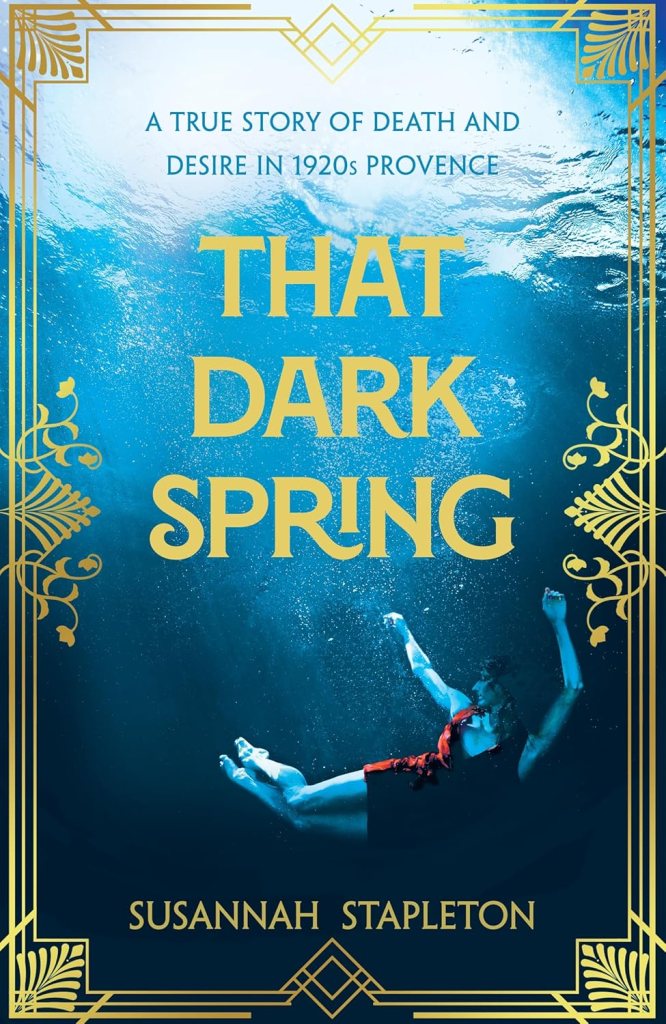
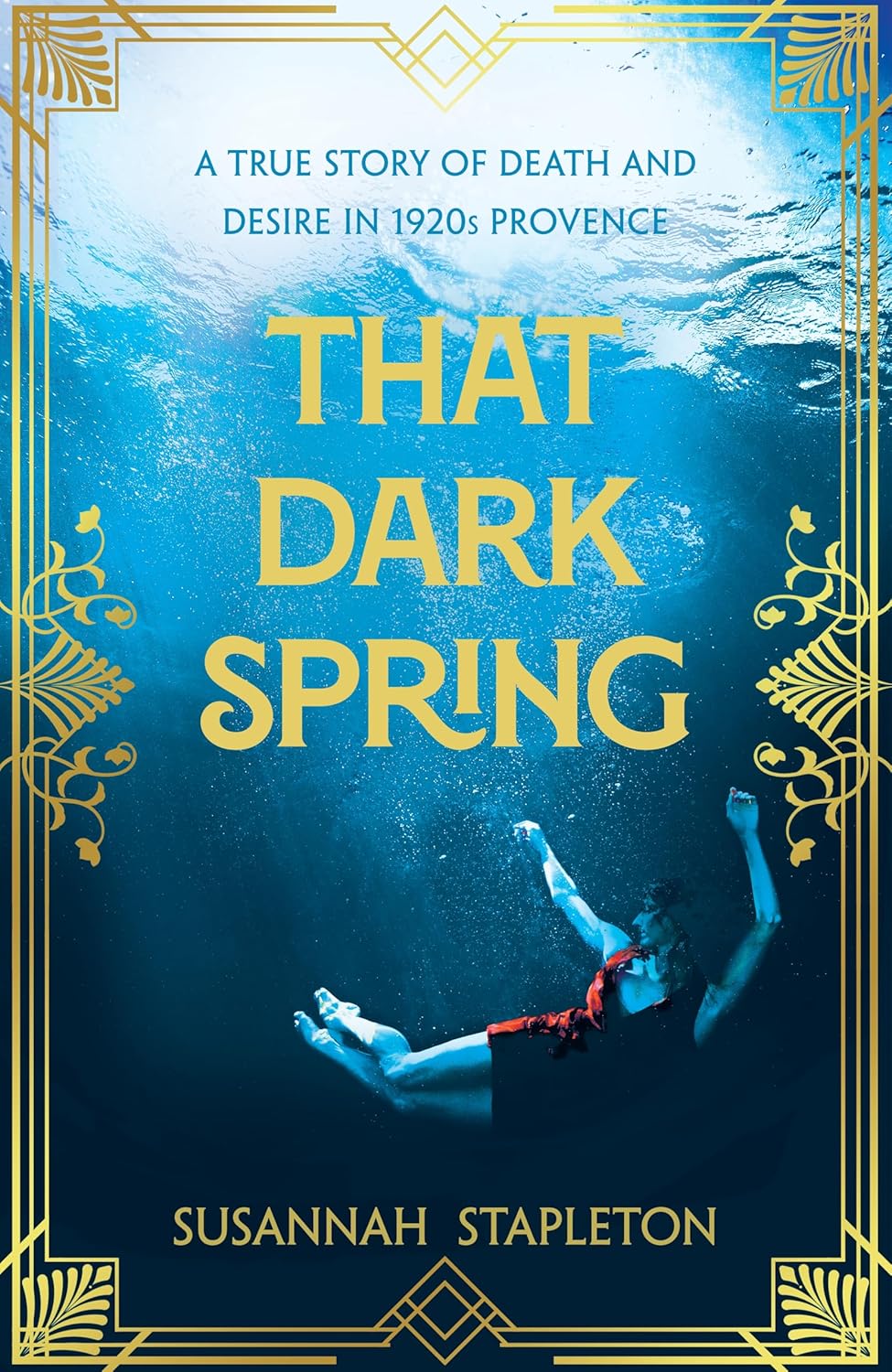
Susannah Stapleton’s newest book, That Dark Spring has a tagline that is guaranteed to send tingles down the spine of true crime buffs. It reads, ‘a true story of death and desire in 1920s Provence.’ A simple sentence, and yet a tantalizing prospect. I immediately had images of sun-drenched fields of lavender, long lunches with delicious food, and a historic town with beautiful architecture. Throw in some stylish French suspects (for some reason when I imagine France, all people are beautiful and well-dressed) and some crime, and I was hooked before even opening the book.
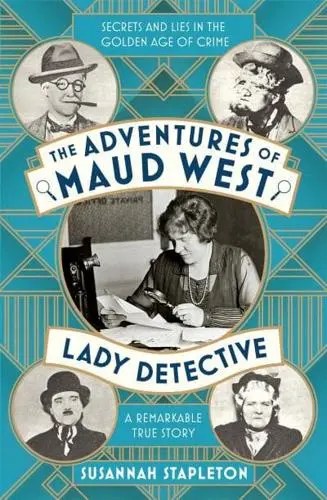
I am a huge fan of Stapleton as a writer. Her debut book, The Adventures of Maud West, Lady Detective, is my all-time favourite non-fiction book, and is one that I have re-read multiple times since it was published in 2019. Her book also inspired my own creative work-in-progress to write about the suspicious death of Madeline Wiltshire, an intriguing case involving cyanide, blackmail and a private detective, that Stapleton mentions in her investigation into Maud West.
But let’s get back to Provence.
That Dark Spring is the story of the death of Olive Branson, the ‘Anglaise’ artist who lived in the small town of Les Baux, a hilltop medieval village, in the 1920s. Her body was found in a water tank at her property and from the get-go readers can tell that something is not right. The local police, who sound very much like the nearly-useless plodding policemen you find in good golden age detective fiction, quickly deem Olive to have committed suicide. BUT, the idea, when you read the evidence, is absurd. I won’t reveal too much about why the notion is absurd, because reading it for yourself is part of the puzzle of the mystery. Thankfully, some slightly more experienced detectives see that the evidence points towards foul play and so a murder investigation begins, with a spotlight being shone on all the secrets of the close-knit town.
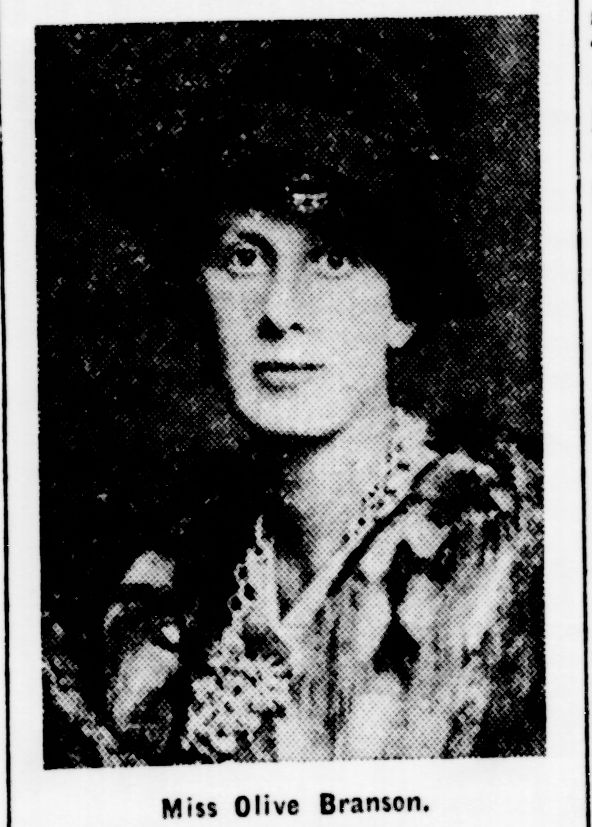
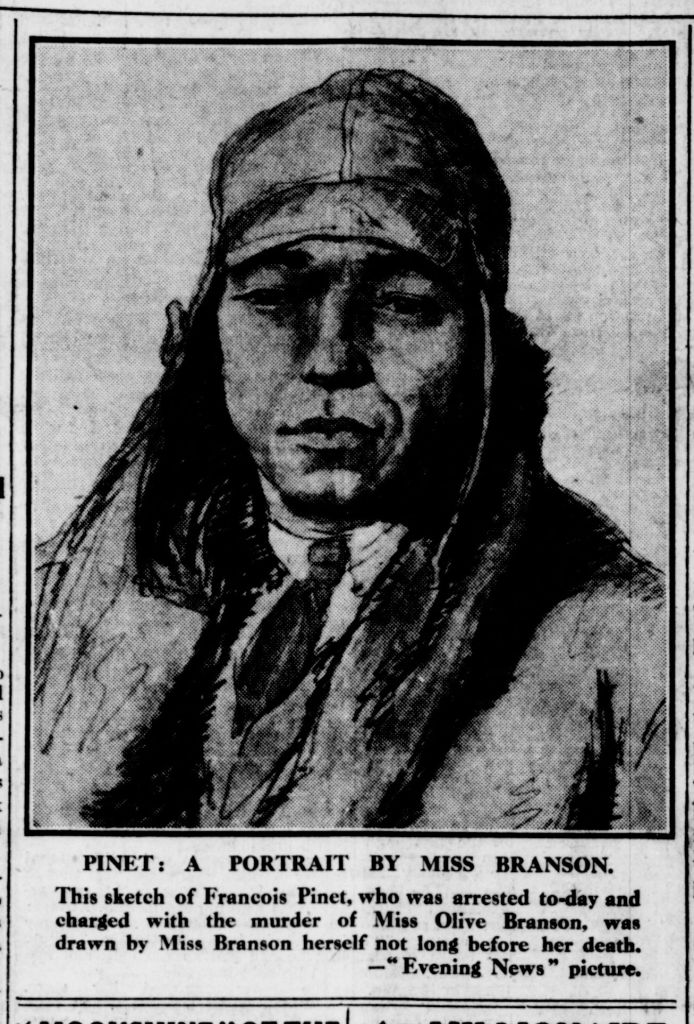
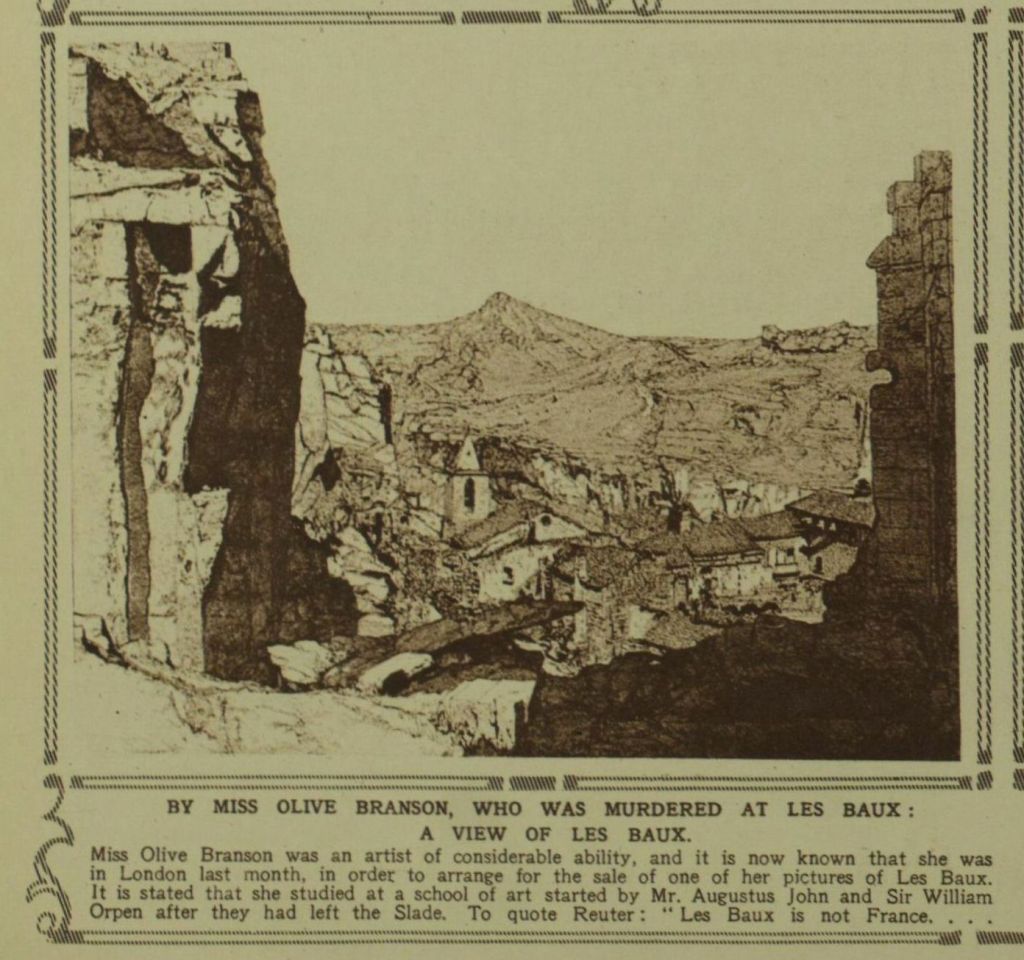
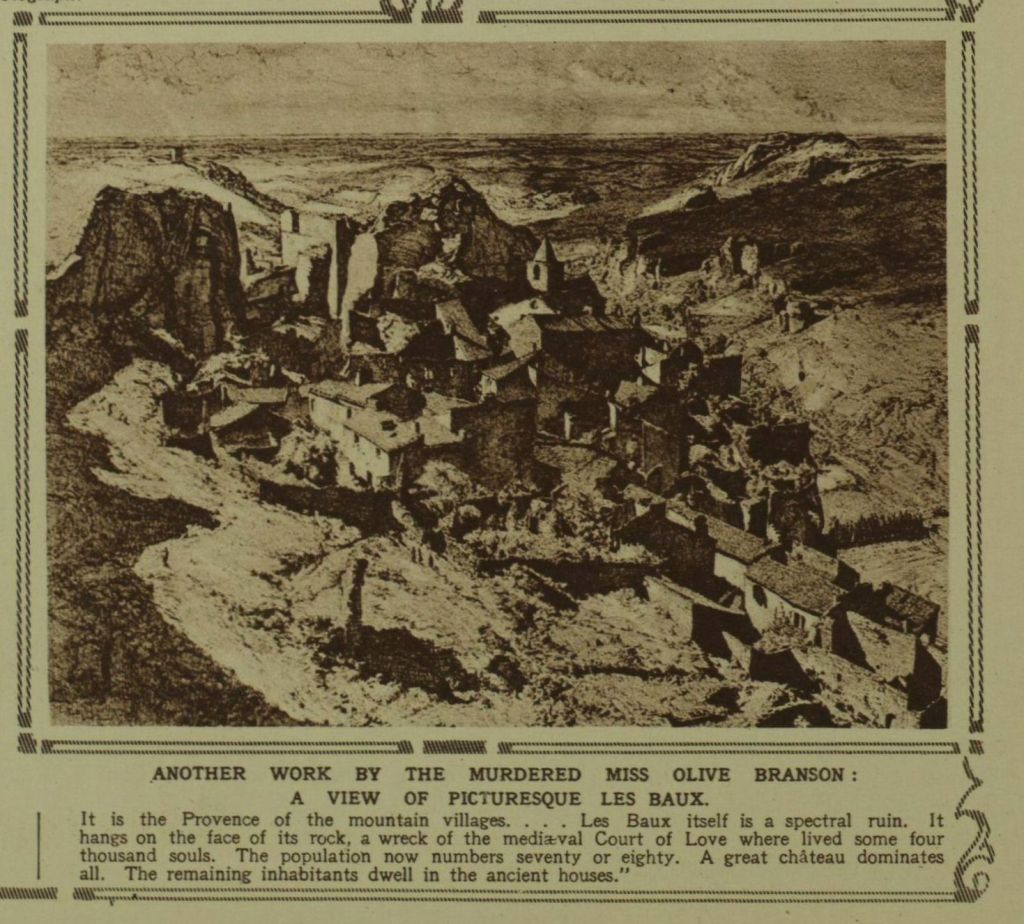
Left: London Daily Chronicle, 2 May 1929. Right: Evening News (London), 7 May 1929.
Stapleton says on her website that she came across Olive Branson’s story when reading a vintage book of French mysteries and had been struck by how dismissive the text was of Olive Branson as a victim. For writers, researchers and historians, this kind of biased view of a historical event is enough to spark an obsession for getting to the truth. This is what Stapleton attempts in her book, taking readers through the day-by-day police investigation, the conflicting witness statements, the rumours, and then placing them within the constraints of a small close-knit village with a fiery history, who close ranks when outsiders come to stick their nose into their business.
The importance of recognising Olive as a person and an artist, rather than just an outsider and a victim, is apparent in Stapleton’s writing. One aspect that I really enjoyed in the book was the inclusion of entries from Olive’s letters and diaries, not just in the lead up to her death, but from her earlier life before she moved to Provence. These excerpts paint her as an opinionated and headstrong person and help build a picture of Olive that makes the idea that she committed suicide even more absurd. These letters and diaries give Olive a voice in her own story, something that is usually missing in police cases. The importance of giving Olive a voice and recognising her as something more than a victim is really important, especially considering how her death was reported in newspapers at the time. In the two news articles below, ‘Olive the artist’ is diminished to ‘Olive the murder victim’, even when the newspaper is discussing her artistic career.
I read That Dark Spring in a flurry of anticipation, resisting the urge to peek at the ending, but the whole-time thinking- BUT DID HE DO IT?! If you too want to find out what happened to Olive Branson, then I highly recommend reading the book. While you’re at it, you should also pick up a copy of The Adventures of Maud West, Lady Detective– both are a must for fans of historical true crime.


 In the library with Mel
Leave a comment