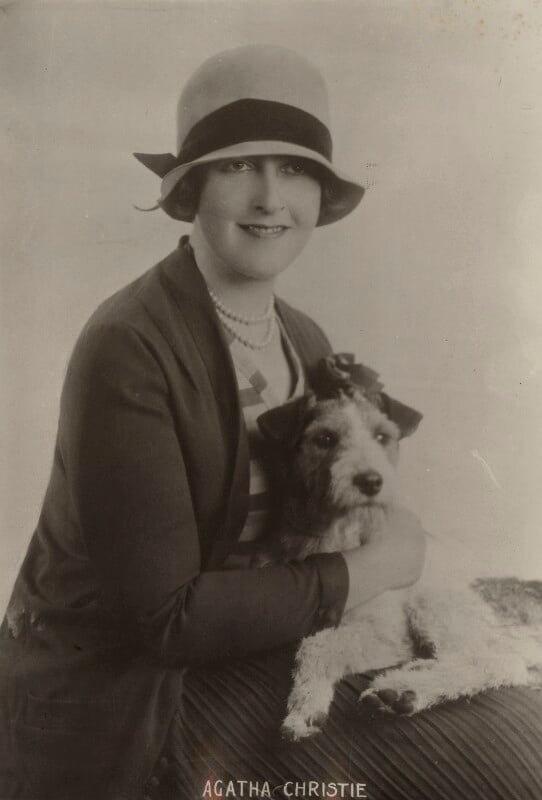
Fans of Agatha Christie always remember their first time reading one of her novels. It’s an experience like no other, an instant connection that starts a lifelong love. My first experience with an Agatha Christie novel was in my early teens, on a rainy Easter school holidays where there was nothing much to do but read. My mother had a paperback copy of Death in the Clouds sitting on the bookshelf and the large wasp on the cover (designed by Tom Adams) instantly drew my attention. The puzzle of a murder in an enclosed space, a limited list of suspects, and the unravelling of secrets, gave me an intoxicating rush of excitement. From the moment that I was introduced to the Belgian detective Hercule Poirot, I was hooked. After that story came many others from the Christie canon, and characters such as Captain Hastings, Miss Marple, Inspector Japp, Miss Lemon and Ariadne Oliver, now feel like old friends.
2026 is a special year for Agatha fans as it marks 50 years since her death in 1976. The British Library’s announcement of a special exhibition celebrating the extraordinary life and legacy of the Queen of Crime is just part of a series of events planned to mark the occasion. To celebrate Agatha in my own way, I thought that I would spend the year reading a selection of her works throughout the six decades of her career, and write about how they reflect the world events that Agatha lived through. Her novels are a lens through which we can better understand twentieth century social history, and from my own experience reading Agatha, my view of ‘Englishness’ was formed through the characters, settings and plots of her detective stories.
To kick off my year with Agatha, I’m going to take a look at the 1920s, the decade which began with Agatha indulging in her love of travel.
1920s Agatha: intrepid traveller
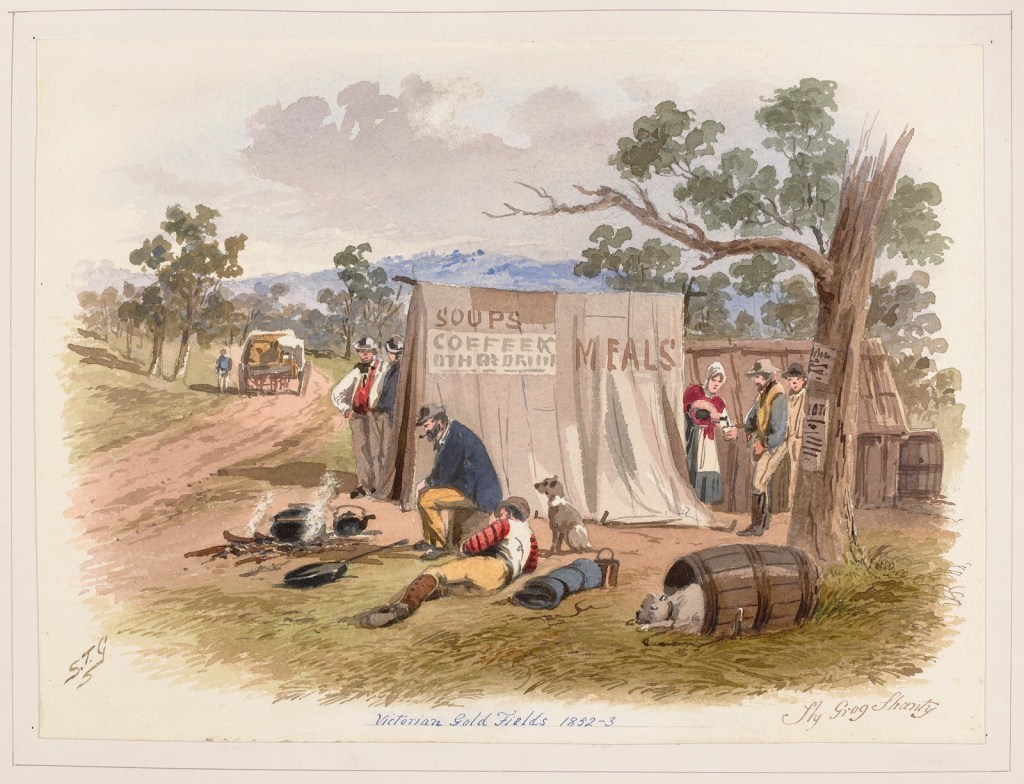
You’ve probably heard the story of how Agatha wrote her first novel, The Mysterious Affair at Styles, which was published in 1920, so I’m going to skip ahead to 1922, a year that saw the publication of her second book, The Secret Adversary. This event coincided with the young Agatha Christie embarking on an epic journey around the world as part of the British Empire Mission. Agatha’s husband Archie was given the opportunity to be financial advisor for this expensive public relations campaign designed to boost trade between the colonies and encourage participation in the upcoming British Empire Exhibition, to be held in 1924. The party of representatives, headed by Major Belcher, would visit South Africa, Australia, New Zealand and Canada, with Agatha and Archie also making a holiday stop in Hawaii. I wrote about the Australian leg of Agatha’s journey, focusing on her time in Victoria, in a blog for State Library Victoria, which you can read here.
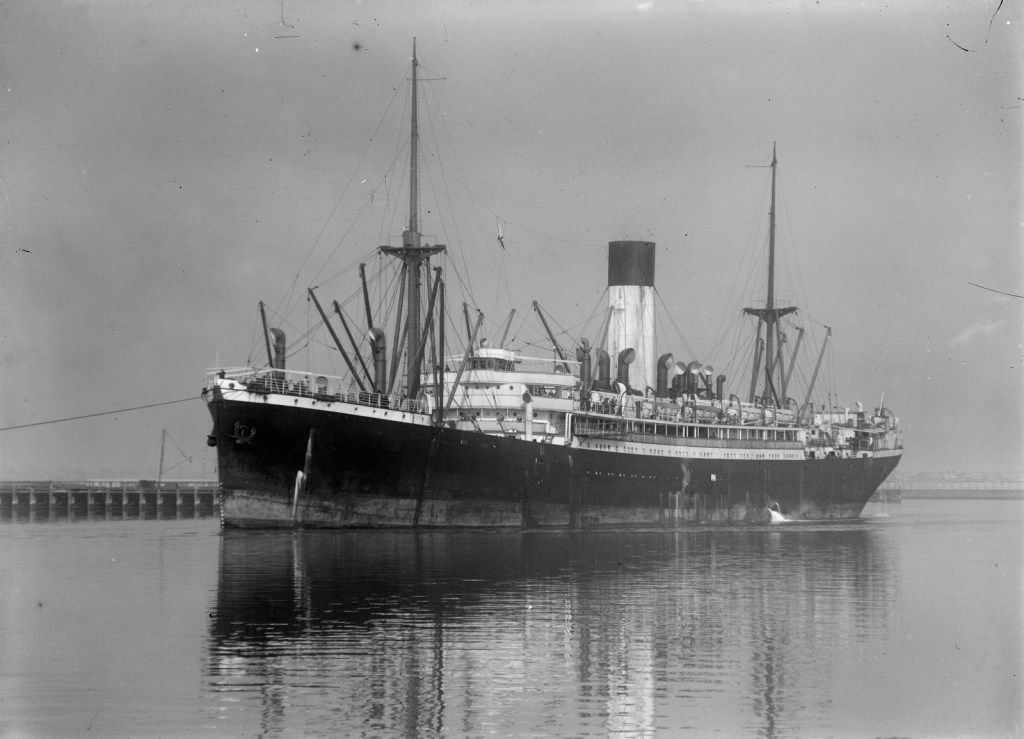
Aeneas, between 1900-1954? Photo by Allan C. Green, State Library Victoria, H91.250/1582
As Archie’s wife, Agatha was able to tag along on this nearly year-long adventure, with most of her travel expenses paid. In her autobiography, she wrote that after much consideration, she and Archie decided that the opportunity to see the world was too good to pass up, saying, ‘if you can’t take the risk of doing something you want, when the chance comes, life isn’t worth living.’1
Agatha longed to see the world, and I think that the dedication in The Secret Adversary, which was published the day after Agatha set sail, reveals something of the mindset that inspired Agatha to undertake this journey. It reads:
To all those who lead monotonous lives in the hope that they experience at second hand the delights and dangers of adventure.
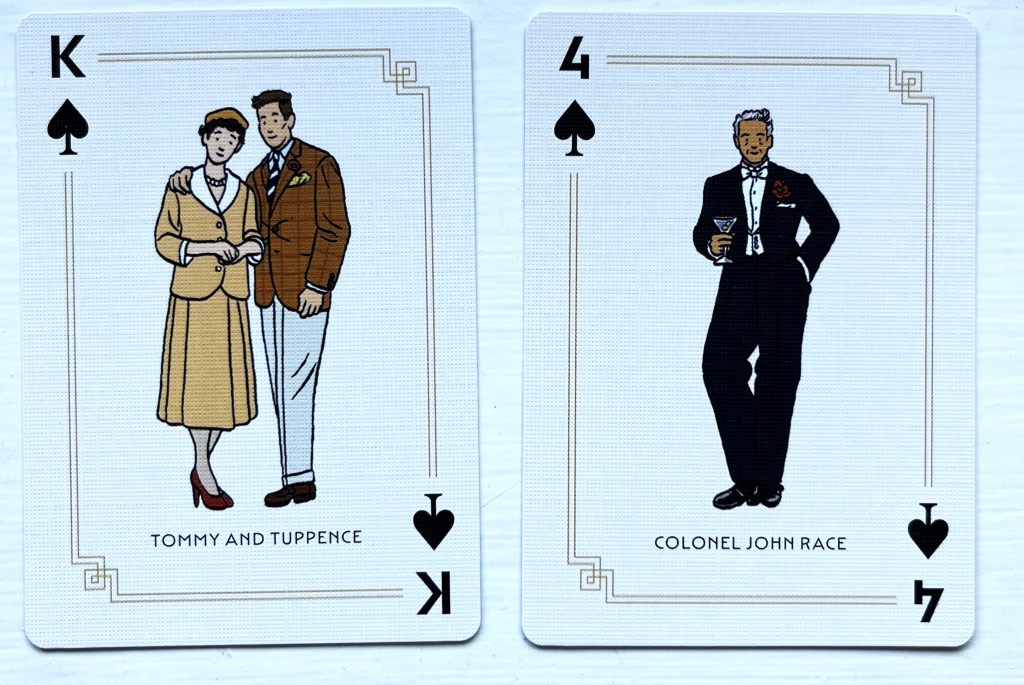
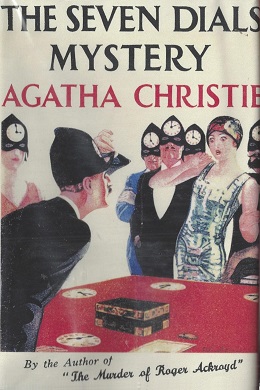
In The Secret Adversary, Agatha introduced readers to Tommy and Tuppence, young adventurers who find themselves at a loose end after the end of the First World War, and are desirous of something useful to do or an adventure to undertake. This sense of restlessness that the protagonists feel was common in early 1920s Britain, with many struggling to settle back into ‘normal’ life after the horrors of the First World War. Society was shifting, and many people found that the life they led before the war wasn’t there for them to go back to, while others refused to be put back into boxes. This was especially true for women, who had enjoyed new freedoms and purpose during the war, taking on jobs vacated by men who were away fighting. This mentality is encapsulated perfectly in the character Tuppence, who is just one example of the capable, self-sufficient young women that Agatha wrote into some of her novels (other great examples include ‘Bundle’ Brent in The Secret of Chimneys and The Seven Dials Mystery, and Victoria Jones in They Came to Baghdad).
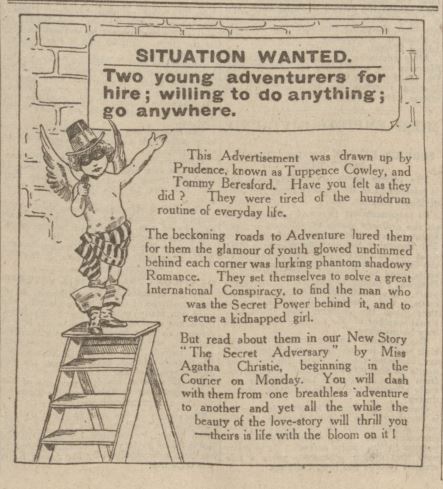
The Secret Adversary was also serialised in newspapers, with the Dundee Courier advertising the story with the promise that readers would ‘dash…from one breathless adventure to another’ with the young adventurers. If Agatha had any anxiety about how her second book would be received while she was away on her travels, she didn’t show it, writing in one of her letters reproduced in the book The Grand Tour, that ‘I really feel Tommy & Tuppence is going to be a success’2. With such quiet confidence, Agatha’s letters home during her travels are instead filled with wonder and excitement at new places and experiences, including at Muizenberg beach near Cape Town, where she and Archie, ‘surf bathed with planks’3 .

Agatha’s travels inspired her to write. In Melbourne, Agatha wrote in letters home that she had found some time to write some short stories, some of which most likely appeared in the collection Poirot Investigates, published in 1924. In an interview with the Australian newspaper The Herald in May 1922, Agatha was asked whether Australia would appear as a setting for any of her future stories. Her response was non-committal, and unfortunately for Australian Agatha Christie fans, it appears that the creative possibilities of an Australian-set adventure or murder mystery was trumped by Agatha’s love of South Africa, which had captured her imagination.
Agatha’s 1924 novel, The Man in the Brown Suit, is the main product of her formative year abroad. Set in South Africa, the story follows Anne Beddingfield, another of Agatha’s capable female adventurers. Anne witnesses a man die in suspicious circumstances at a tube station, and clues lead her to journey from England to Cape Town. Interestingly, there are many aspects of Agatha to be found in Anne Beddingfield, as they both shared a desire for travel, and both suffered acutely from seasickness. Many of the places that Agatha visited on her travels also make an appearance in The Man in the Brown Suit, including Muizenberg, where Agatha learned to surf.
The novel is dedicated to Major Belcher, the manager of the British Empire Mission, and he also appears as the character Sir Eustace Pedler in the novel. In her autobiography, Agatha described Major Belcher as ‘a character’, so perhaps it was inevitable that he would find his way into one of her books. According to Agatha, Major Belcher had a terrific ability to bluff his way into advantageous positions, for example as Controller of Potatoes during the First World War. This was a cushy desk job in which he was paid several thousand pounds salary to control the supply of potatoes, which were virtually non-existent at the time. Agatha quotes Major Belcher as once having said to her that, ‘you can do anything- you’ve only got to get a man as second-in-command who knows a bit about it, and read up a bit, and there you are!’4.

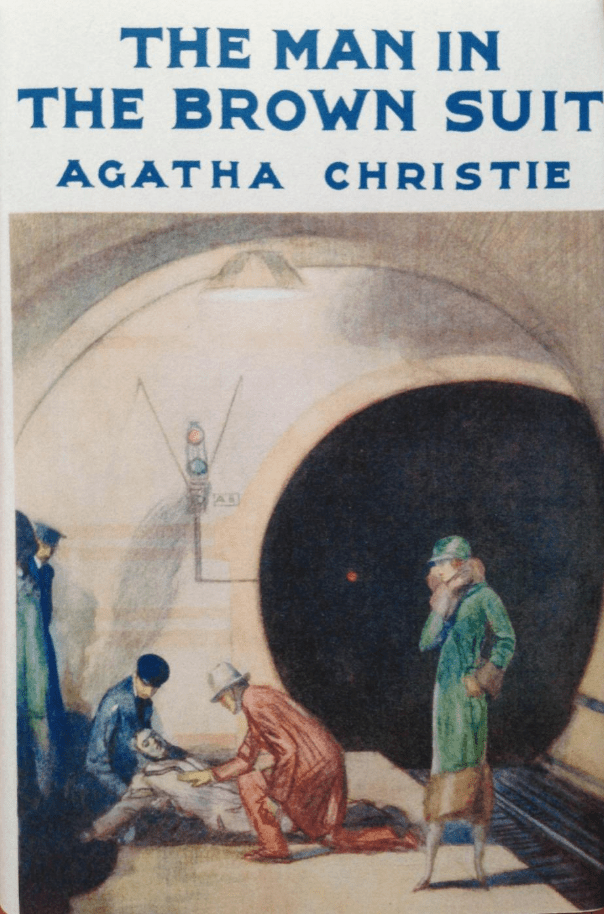
Unfortunately, The Man in the Brown Suit received mixed reviews compared to Agatha’s previous novels. A reviewer for Melbourne’s The Age, accused Agatha of having written a ‘poor’ story ‘as a result of writing too many novels’. Agatha had certainly showed that she could be relied on to deliver a new manuscript quickly, perhaps because she was keen to fulfill her contractual obligations with her publisher The Bodley Head, who had given her rather unfavourable terms when they had agreed to publish The Mysterious Affair at Styles and a further five novels.

In contrast to the view expressed in The Age, Melbourne’s other prominent newspaper The Argus, wrote, ‘Agatha Christie has the knack of constructing a first-class mystery story, and “The Man in the Brown Suit” is one of her best efforts’. It was the second-last book that she published with The Bodley Head, and although much has been written about Agatha’s strained relationship with her publisher and her desire to fulfill her contractual obligations as quickly as possible (perhaps, to some, to the detriment of quality), I think these books show Agatha’s development into a full time serious writer. When publishing The Secret Adversary, writing was still somewhat of a hobby. This is probably best exampled by the exchange that Agatha had with Archie aboard the boat when they started their grand tour. Agatha was so seasick that she told Archie that she would get off at Madeira and find work instead of continuing on. ‘What work?’ Archie supposedly asked, and Agatha answered, ‘I would quite like to be a parlour-maid’5. Surely her answer should have been to be a writer? I’ve been to Madeira and can safely say it would be the perfect isolated location to get some writing done. But to Agatha, in 1922, being a parlour-maid was more of a ‘sure thing’ to earn a living then being a writer. Skip forward a few years and having travelled the world, Agatha is much more confident in her capabilities as a writer.
As a reader, I enjoyed The Man in the Brown Suit more than The Secret Adversary. Anne Beddingfield is a likeable protagonist, although sometimes you do wonder at her decisions. Both stories offer the thrill of adventure with female protagonists that launch themselves out of domestic spheres and into a world of excitement. Through Tuppence and Anne, we see a glimpse of the young Agatha who ‘longed to see the world’6, and whose life as a wife and mother, but also a successful writer, was on the up. The second half of the 1920s would see Agatha come crashing back down to earth, but that’s a story for next time.
Fancy your own Year with Agatha? Agatha Christie Limited has recently launched the 2026 Christie Reading Challenge. Find out more about it here.
References
- Christie, A (2010 [1977]), An Autobiography, Harper Collins, London, p 288 ↩︎
- Prichard, M (ed) (2012), The Grand Tour: letters and photographs from the British Empire Expedition, Harper Collins, London, p 125. ↩︎
- As above, p 54. ↩︎
- Christie, A (2010 [1977]), An Autobiography, Harper Collins, London, p 285 ↩︎
- Prichard, M (ed) (2012), The Grand Tour: letters and photographs from the British Empire Expedition, Harper Collins, London, p 25 ↩︎
- As above, p 15. ↩︎


 In the library with Mel

Leave a comment